Fighting sarcoidosis as well as other rare diseases.
Episodes
Monday May 09, 2022
Monday May 09, 2022
Sarcoidosis patients have shared many stories with me here on the Sarc Fighter podcast. It got me thinking about expectations. What did we expect from our lives before sarcoidosis? What do we expect now? Do we ever expect to get our old lives back -- and how hard should we try to get there.
Managing expectations can be tough and perhaps frustrating. But it can also be fulfilling.
In Episode 61 of the Sarc Fighter Podcast, I dig in really listen to what some of my guests had to say and look at how they are choosing to manage their lives -- and their expectations.
(Be sure to listen at the end for the Full version of Zombie - The official song of the Sarc Fighter Podcast!)
Show notes
Learn about the clinical trial from Novartis: https://bit.ly/3o9LXKk
Juliet's fundraising page: https://www.justgiving.com/fundraising/julietcoffer2
Remember these hashtags for April! #WhatIsSarcoidosis #MakeItVisible
Universal Barriers Podcast: https://www.stopsarcoidosis.org/sarc-fighter-podcast/
More on Universal Barriers https://www.stopsarcoidosis.org/events/universal-barriers-in-dealing-with-a-chronic-disease-a-sarcoidosis-perspective/
Sarcoidosis Awareness Film: https://www.purpledocumentary.com/
Nourish by Lindsey: https://www.nourishbylindsey.com/
Dr. Jinny Tavee's book, The Last Day of Suffering: https://www.amazon.com/Last-Day-Suffering-Health-Happiness/dp/0615542751
Read about the patient trial with aTyr 1923 https://investors.atyrpharma.com/news-releases/news-release-details/atyr-pharma-announces-positive-data-phase-1b2a-clinical-trial
Also -- Note that investors also believe in the promise of aTyr 1923: https://investors.atyrpharma.com/news-releases/news-release-details/atyr-pharma-announces-closing-863-million-public-offering
Yale University and sarcoidosis skin treatment | Dr. William Damsky: https://news.yale.edu/2018/12/26/yale-experts-treat-severe-disfiguring-sarcoidosis-novel-therapy
Stanford University Clinical trial | Dr. Mathew Baker: https://med.stanford.edu/sarcoidosis/clinical-trial.html
MORE FROM JOHN
Cycling with Sarcoidosis http://carlinthecyclist.com/category/cycling-with-sarcoidosis/
Watch the Prednisone Town Hall on YouTube https://youtu.be/dNwbcBIyQhE
More on aTyr Pharma: https://www.atyrpharma.com/
Do you like the official song for the Sarc Fighter podcast? It's also an FSR fundraiser!
If you would like to donate in honor of Mark Steier and the song, Zombie, Here is a link to his KISS account. (Kick In to Stop Sarcoidosis) 100-percent of the money goes to the Foundation. https://stopsarcoidosis.rallybound.org/MarkSteier
The Foundation for Sarcoidosis Research https://www.stopsarcoidosis.org/
Donate to my KISS (Kick In to Stop Sarcoidosis) fund for FSR https://stopsarcoidosis.rallybound.org/JohnCarlinVsSarcoidosis?fbclid=IwAR1g2ap1i1NCp6bQOYEFwOELdNEeclFmmLLcQQOQX_Awub1oe9bcEjK9P1E
My story on Television https://www.stopsarcoidosis.org/news-anchor-sarcoidosis/
email me carlinagency@gmail.com
Monday Apr 11, 2022
Monday Apr 11, 2022
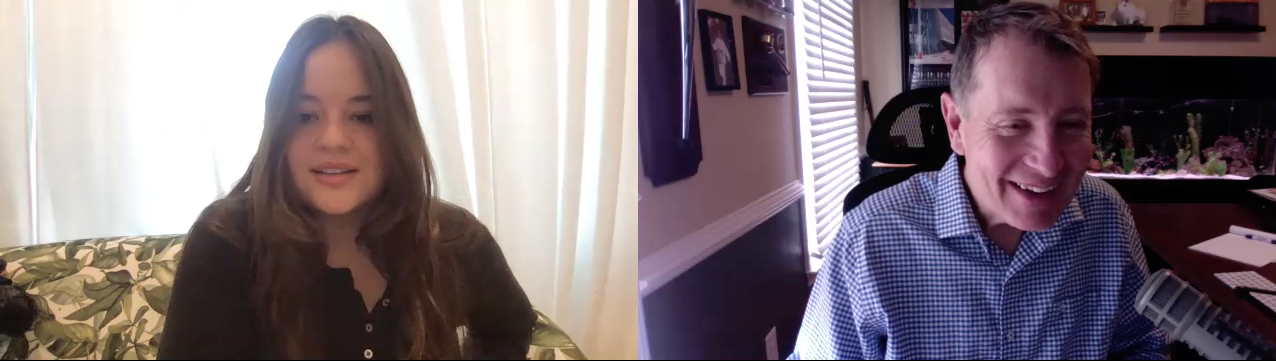
Angelica Gauptman's grandmother died from complications of sarcoidosis. Angelica is trying to figure out why. She believes it had something do with the combination of Vitamin D and Prednisone. To be clear there is no clinical evidence that proves a link. Angelica is a high school senior with more than your average get up and go. She has undertaken a survey of Sarc patients, and has gotten the attention of some top level researchers. Hear her story, and the heartbreaking way her grandmother passed in this edition of the Sarc Fighter Podcast.
Show Notes
Learn about the clinical trial from Novartis: https://bit.ly/3o9LXKk
email Angelica agauptman@gmail.com
Remember these hashtags for April! #WhatIsSarcoidosis #MakeItVisible
Here is a link to all the activities for April ! https://www.stopsarcoidosis.org/awareness-2022
Universal Barriers Podcast: https://www.stopsarcoidosis.org/sarc-fighter-podcast/
More on Universal Barriers https://www.stopsarcoidosis.org/events/universal-barriers-in-dealing-with-a-chronic-disease-a-sarcoidosis-perspective/
Sarcoidosis Awareness Film: https://www.purpledocumentary.com/
Nourish by Lindsey: https://www.nourishbylindsey.com/
Dr. Jinny Tavee's book, The Last Day of Suffering: https://www.amazon.com/Last-Day-Suffering-Health-Happiness/dp/0615542751
Read about the patient trial with aTyr 1923 https://investors.atyrpharma.com/news-releases/news-release-details/atyr-pharma-announces-positive-data-phase-1b2a-clinical-trial
Also -- Note that investors also believe in the promise of aTyr 1923: https://investors.atyrpharma.com/news-releases/news-release-details/atyr-pharma-announces-closing-863-million-public-offering
Yale University and sarcoidosis skin treatment | Dr. William Damsky: https://news.yale.edu/2018/12/26/yale-experts-treat-severe-disfiguring-sarcoidosis-novel-therapy
Stanford University Clinical trial | Dr. Mathew Baker: https://med.stanford.edu/sarcoidosis/clinical-trial.html
Bonus Episode on COVID-19 and Sarcoidosis https://beatsarc.podbean.com/e/bonus-episode-sarcoidosis-and-covid-19-presented-by-the-foundation-for-sarcoidosis-research/
Bonus Episode Sarcoidosis and Prednisone: https://beatsarc.podbean.com/e/bonus-episode-sarcoidosis-town-hall-dealing-with-prednisone-presented-by-the-foundation-for-sarcoidosis-research/
MORE FROM JOHN
Cycling with Sarcoidosis http://carlinthecyclist.com/category/cycling-with-sarcoidosis/
Watch the Prednisone Town Hall on YouTube https://youtu.be/dNwbcBIyQhE
More on aTyr Pharma: https://www.atyrpharma.com/
Do you like the official song for the Sarc Fighter podcast? It's also an FSR fundraiser!
If you would like to donate in honor of Mark Steier and the song, Zombie, Here is a link to his KISS account. (Kick In to Stop Sarcoidosis) 100-percent of the money goes to the Foundation. https://stopsarcoidosis.rallybound.org/MarkSteier
The Foundation for Sarcoidosis Research https://www.stopsarcoidosis.org/
Donate to my KISS (Kick In to Stop Sarcoidosis) fund for FSR https://stopsarcoidosis.rallybound.org/JohnCarlinVsSarcoidosis?fbclid=IwAR1g2ap1i1NCp6bQOYEFwOELdNEeclFmmLLcQQOQX_Awub1oe9bcEjK9P1E
My story on Television https://www.stopsarcoidosis.org/news-anchor-sarcoidosis/
email me carlinagency@gmail.com
Remember these hashtags for April! #WhatIsSarcoidosis #MakeItVisible
Here is a link to all the activities for April ! https://www.stopsarcoidosis.org/awareness-2022
Learn about the clinical trial from Novartis: https://bit.ly/3o9LXKk
Universal Barriers Podcast: https://www.stopsarcoidosis.org/sarc-fighter-podcast/
More on Universal Barriers https://www.stopsarcoidosis.org/events/universal-barriers-in-dealing-with-a-chronic-disease-a-sarcoidosis-perspective/
Sarcoidosis Awareness Film: https://www.purpledocumentary.com/
Nourish by Lindsey: https://www.nourishbylindsey.com/
Dr. Jinny Tavee's book, The Last Day of Suffering: https://www.amazon.com/Last-Day-Suffering-Health-Happiness/dp/0615542751
Read about the patient trial with aTyr 1923 https://investors.atyrpharma.com/news-releases/news-release-details/atyr-pharma-announces-positive-data-phase-1b2a-clinical-trial
Also -- Note that investors also believe in the promise of aTyr 1923: https://investors.atyrpharma.com/news-releases/news-release-details/atyr-pharma-announces-closing-863-million-public-offering
Yale University and sarcoidosis skin treatment | Dr. William Damsky: https://news.yale.edu/2018/12/26/yale-experts-treat-severe-disfiguring-sarcoidosis-novel-therapy
Stanford University Clinical trial | Dr. Mathew Baker: https://med.stanford.edu/sarcoidosis/clinical-trial.html
Bonus Episode on COVID-19 and Sarcoidosis https://beatsarc.podbean.com/e/bonus-episode-sarcoidosis-and-covid-19-presented-by-the-foundation-for-sarcoidosis-research/
Bonus Episode Sarcoidosis and Prednisone: https://beatsarc.podbean.com/e/bonus-episode-sarcoidosis-town-hall-dealing-with-prednisone-presented-by-the-foundation-for-sarcoidosis-research/
MORE FROM JOHN
Cycling with Sarcoidosis http://carlinthecyclist.com/category/cycling-with-sarcoidosis/
Watch the Prednisone Town Hall on YouTube https://youtu.be/dNwbcBIyQhE
More on aTyr Pharma: https://www.atyrpharma.com/
Do you like the official song for the Sarc Fighter podcast? It's also an FSR fundraiser!
If you would like to donate in honor of Mark Steier and the song, Zombie, Here is a link to his KISS account. (Kick In to Stop Sarcoidosis) 100-percent of the money goes to the Foundation. https://stopsarcoidosis.rallybound.org/MarkSteier
The Foundation for Sarcoidosis Research https://www.stopsarcoidosis.org/
Donate to my KISS (Kick In to Stop Sarcoidosis) fund for FSR https://stopsarcoidosis.rallybound.org/JohnCarlinVsSarcoidosis?fbclid=IwAR1g2ap1i1NCp6bQOYEFwOELdNEeclFmmLLcQQOQX_Awub1oe9bcEjK9P1E
My story on Television https://www.stopsarcoidosis.org/news-anchor-sarcoidosis/
email me carlinagency@gmail.com
The following is a web generated transcript from my interview with Angelica Gauptman.I'm sorry for typos and misspellings.
Welcome back to the Sarc Fighter podcast. And joining me now is Angelica Galtman • • in California. Angelica, welcome. You're just across the bridge from San Francisco.
Yes. Thank you. I am. Yes.
All right. So that you are in Marin County, and you were just telling me that, it's often foggy in San Francisco, but it's always beautiful in Marin County.
Yes. As soon as you kind of cross the middle of the Golden Gate Bridge, it's like a wall. • • It's kind of like the Marinas, the heavens, and San Francisco the opposite. It's very funny. Always very funny to drive across the bridge.
Got it. Okay. Well, now, um, you are a high school student applying, to colleges. But we were just talking before we began recording. You are looking to go to some fairly impressive colleges. Where have you applied?
I've applied to a lot of the IVs, Stanford, Harvard, UPenn, Columbia, um, and a lot of the UCS. UCLA is definitely my top choice. So, yeah, I guess they are, um, • pretty hard to get into, but we'll see.
Yeah, well, those are high levels, but • • you obviously have the grades in the background and so forth to handle that sort of thing.
Possibly. I don't know what they're looking for, so I have no idea, but hopefully something will get me there.
Let's talk a little bit about your sarcoidosis story. And when I say yours, I mean your grandmother's. So your grandmother died from complications related to sarcoidosis. Is that the best way to put it?
Yes, I'd say so, yeah.
All right. And you are trying to figure out if there's a connection between prednisone and vitamin • • • D, • which, um, could be very controversial. There are so many places to start here, but let's just jump in with your grandmother's story. Um, when was she diagnosed with prednisone?
Um, two, 2007. She was diagnosed with pulmonary circuit two, 2007 and then pregnant on, I believe, in two 2009.
Okay. And she took prednisone for quite a long time.
Up until two 2017. Okay. Did she pass IN 2017?
20 17.
Took it all the way through?
Yeah, all the way through. Do you know what levels of, uh, doses she was • • • taking?
Do you know what I think it was? Two 200, but I will need to • • • • check.
Wow. Okay. That would be a lot. Yes.
She was on a lot of it.
A lot of PREDNISONE. All right, so she was also taking was she prescribed vitamin D or did she just take vitamin D?
Um, at the time, they were prescribing her vitamin D supplements. But now that I look into her case • • file, she, um, was over producing vitamin D naturally, as a lot of pulmonary circulations patients do. It just didn't come up on the scans because the vitamin D that she was producing was actually in an inactive • • state. So it didn't come up on the scans that they did. They had to do a scan for inactive vitamin D to find it, but they didn't do that. So they just prescribed her more vitamin D supplements instead of doing the second • • scan.
Got it. And what eventually led to her death, according to your hypothesis • • • then? • • • •
So, • • • • um, I think that the overabundance of vitamin D that was in her system, • • • um, um, with the over, like, immense amount of predisone that she was • • taking led to the hemorrhage that she had. So the hemorrhage was an, um, internal bleeding. It was a really big part of it. A, um, really big bruise on her abdomen. And she developed that about a week or • • • • so after, um, they up her credit zone a little • • bit because they had been taking it down slowly. But they upped it again. And once they upped it, she, um, kind of developed that bruise. And that's what we went to the hospital • • for. And, uh, that's what led to, um, her kidney failure and her untimely death. Um, so I believe that the prednisone and vitamin D are what caused the hemorrhage or the bruise. And that's what caused her to pass away.
Now you're taking a course where you look into correlations, causations, that sort of thing. What is it?
It's AP research.
And so you started looking at other patients to • • see if your grandmother was not the only one. Tell us why you thought that and what you found.
So, um, in the class, we are taught to, uh, create our own project. And it was supposed to be a gap in the knowledge that is there today. And so this, to me was a gap in the knowledge because nobody. I talked to researchers at Stanford, UCSF that had, um, been researching, especially pulmonary circuit oysters for years. And they had never come across or thought of anything like this. And there were no real scholarly articles out there about this or scholarly work. So this, um, was my gap. And in the class we're supposed to create our own methodology and collect our own data. So I thought that there was no better way since there was no data on this out there, there was no better way than to • • • interview other patients to see if • • • they had similar experiences with prednisone or vitamin D. And, um, so when I talked to quite, um, a few, they had told me that they never developed hemorrhage, uh, that large bruise on their abdomen. However, they told me that they also were over prescribed vitamin • • • D because again, the doctors and researchers didn't do that second scan for the inactive form of vitamin D. And they said that when they were taking vitamin D and prednisone, there were a lot of detrimental, • • • • um, effects on their bodies that they experienced. And one man actually told me that he did start to • • • • • ease very easily when they upped his Joseph prednisone while he was on vitamin • • • • D, which didn't happen when he was off of vitamin • • • D.
Interesting.
So he was continuing to take the • • pretinosome, which, most of us do. I think that's for ninety 90% of patients, that's the first line of defense is prednisone. So almost everybody listening to this, if they have had • sarcodosis, has, taken prednisone. But the vitamin, uh, D is the wildcard here. And so you found at least one other person. How many patients have you • • • • • interviewed?
So, um, through FSR, I interviewed • four. And, um, then outside of FSR, on my own findings, I interviewed about ten to fourteen.
Okay, all right, got it. And these patients were • • • all were they taking vitamin D because they were in the supermarket and they said, oh, I'm going to take vitamins. Vitamin D is good for you. Or were they prescribed vitamin • • D?
No. Every single one of them was prescribed a vitamin D supplements, except for the very few of them, • um, whose doctors actually thought to do the scan for inactive vitamin D and saw the circuit patients overproduce it naturally. So, aside from the two that were taken off the supplements because of that second scan, everybody was prescribed vitamin D • • supplements.
Got it. So are you still actively looking for people to • • interview?
I am, yes. So, • • um, while my project itself is due in the next month for the class, I will definitely be continuing to research myself. So, yeah, I'm definitely looking, um, for more interviewees.
Yeah. Okay. So what kind of person was your • • • • grandmother?
My grandmother was amazing. She was just the best person. She was my best friend, really, • truly. She, uh, was the one who kind of. My parents were both at, um, work • • very most of the day. So she was the one who I kind of spent most of my time with when I was, um, • • little. And, um, when I grew • • • • • • up, • • um, she was honestly an incredible woman. She taught me to Cook, she taught me manners. She taught me everything honestly. And, um, while the disease definitely slowed her down, she had oxygen tanks that she was trapped to and she couldn't really • • travel. Even though, um, she loved to travel, she, um, still somehow • • always helped me with whatever I needed. She always was there for me. Whenever I had an event at school, she would always help me with those. • • • • So she • • was so absolutely selfless. It was honestly inspiring to me.
That's an amazing story. And then, when did she first start noticing that there was something • • • • • • wrong?
When I was about • five. I, um, don't even remember what she noticed. If I'm being honest, I think I was too young to notice. And when she passed, I was only thirteen.
Well, um, it's been a long time, so I don't really know what caught how she noticed it, but I just • • remember, I, um, was sitting on the couch when I was five and there was a man that came with oxygen tanks into our house at about seven or eight. 08:00 p.m. It was late for me back • • then, and, um, he strapped her to the oxygen tanks or strapped them onto her, I guess so. That's just what I • • • remember. I remember she had a lot of trouble breathing.
That's what I remember it to • • • • • be, ultimately, because it's very hard in many, um, cases for doctors to even diagnose • • sarcoidosis. So I was just wondering if you, um, knew anything about • • how that all came.
So, um, they didn't really know what it was back then as well, as much. It was even less research than it is now. And at that time, she was in her late fifty 50s and told her that she was one of the really rare people and that, um, this illness only traveled • • within very young women, which now we see is not true at all. But so, um, yeah, at the • • time, they didn't expect • • it. They, um, thought it was actually literally anything • • • else, but, um. Yeah, so that's what they kind of told her. They said that you're one of the rare women that isn't in her twenty 20s or 30s that got • • • • this interesting.
Wow. So she lived with you're, spending most of your time with her, your parents are at work and she's got these oxygen tanks. What was her daily life.
Like?
It was very selfless. Again, I don't know how to describe • • • it. She was on bedrest, sadly, for most of the last few • • • years. • • Um, it was very hard for her. The oxygen tanks and the absolute lack of energy that she had and the lack of mobility that she • • had. So, um, her life was mostly just taking care of me and my little cousins. I have three little cousins who are all boys, who at the time lived with her as • • well. And, um, so she would take care of us all the time. She would Cook for the whole • family. So her daily life was just taking care of others. Always. It was always helping my little cousins with their homework, helping me with my homework, cooking for us, cleaning the • • house. So, um, it was selfless, very selfless.
But she was able to do that even with the sarcoidosis. Uh, did she have the oxygen tanks that you pulled on a little cart or how did she get Around?
Um, well, the oxygen tanks were on wheels, so she could walk and kind of stroll them. But cooking wise, uh, she kind of just stood and seared it on the pan and put it in the oven. And then for all of our homework, we would be usually sitting for that and then cleaning wise. I mean, she didn't mop the floors or anything like that, but she'd, like, clean up the dishes or something that required standing and moving her arms instead of running around the house.
And she just continued to do that right on through Sarcaidosis.
Oh, • • • • yes.
Wow. What was your grandmother's name?
Lydia Glaser.
It must have been very sad for you and your family when you took her to the hospital because of what looked like a bruise. And then she didn't come home.
Yeah, it was shocking. And, um, there were definitely aspects of, • • um. Um, I guess layers of shock that came in as well, because it was really interesting. She had • • actually been doing, um, a lot better on the last two days before her passing, then her entire week • that she spent there, and they had actually signed her out of the ICU and put • • • her into, um, normal hospital room. And she would be fine to go over the night. So, um, in the morning, they said that she would be free to go. And then that morning, her kidneys started shutting down. And so, • • • um, that was the shocking, um, part, I think it was. Two days later, she passed away. Um, and again, the kidneys were also another kind of thing in my research that I looked at as well, because, um, of kind of the connection of vitamin D and prednisone and all that. So all of it, her whole case, honestly, is just such a • mystery. And I'm trying, um, so hard to kind of connect the dots, but it's very hard, as you can • • • imagine. • • •
Wow. So you reached out to the foundation for sarcoidosis research. Did you just find them with a Google search or how did that come to be?
Yes. So I believe, um, it was my sophomore year of high school. I'm a senior now, so two years • • • ago, • •um, I don't know. I felt like I was old enough to kind of • • • start researching and looking into her case file and all that • • stuff. But, • • • um, before I even began or thought of my • research, I just wanted, um, to do something that would contribute to the community that my grandmother was in, and that would kind of, I don't know, not honor her, • • but, yeah, I guess it is honor her in a way, because I just saw how she was such an active person. She loved to travel before Circuit Oasis, and now she couldn't. And I couldn't imagine a whole community, um, of people going through that. • So not only in, um, her name, but also for the community. I just kind • • of reached, um, out. I asked for an internship, but I was sixteen 16 and would, uh, only give out internships to eighteen 18 • • or. And so they, um, actually had to redo. I feel terrible for Mindy. They had to redo their entire paperwork to allow me to intern and volunteer at the age of • • • sixteen 16. And I got put with Jim and his peer mentor team • • and. Yeah, it just kind of took off from • • there.
Wow. How old are you now? Are you eighteen?
I'm eighteen 18.
Yeah. Eighteen 18 now. Okay, so you've been doing this for two years? Yes. And will you continue, uh, to work with FSR?
Definitely. I'm trying to start a youth advocacy program at my high school where I've been trying, um. It's getting very close. • • • • Um, I have a lot of ideas for FSR, and, uh, I also just love working with everybody in the gym. It's a great community that I love being a part • • • • of. • • • • •
Wow. • Um, and so when will you feel like you have a sample size • • • or enough, uh, data to move, uh, • • forward with • • your project or feel like it's Done?
I don't think I'll ever feel like it's done if I'm being honest. I think I want to keep pursuing this until I get a solid answer or until I start testing it in the lab or something like that. So I don't think my hypothesis is enough for me. And I don't think gathering enough evidence to support it is enough for me. I think I want to actually see the evidence to have, um, it kind of be enough and then see how we can. I mean, if it's true and if it's plausible to • • see how I can keep, um, helping and seeing if maybe people should start testing for this inactive form of vitamin D and seeing how I can kind of make that happen. So I don't think that it's honestly ever going to be done for me. This project. Um, even with hypothesis, that's definitely not what I'm ending with now.
You will know soon if you've been accepted to Harvard or one of these other places. Are you going to be a medical student? Because you told me that you also might look at being a lawyer. I can't imagine you having the time to study for the bar exam and doing this.
Yeah. So it really depends. I'm just so unsure of my major right now. I have two very different kind of spheres and majors that I could go into right now. I've been working at a law firm for the past couple of years. I really like that sphere, um, of work as well. But even if I were to go into law, I think that I would still continue this with what time I had and maybe pass it on to somebody else and just kind of help out as much as I could. But I definitely don't want this project and this hypothesis to kind of • • • end because I think it is, um, so important. So if I do study, end up researching medicine in College, um, and have that be my major truth, this is definitely going to be my preferred project. But if it's lost, then either I'll pass it onto someone or just continue it on my downtime.
Yeah. So have you gotten any sort of interest, uh, from researchers that are already out there in the field, that have been through all of this and are looking for • • something to dive more deeply • • • into?
So I've run this by, um, the two researchers that I think would be most interested in right now or have given me the most interest. • • Um, one young man, uh, at Stanford, Dr. Matthew Baker, he showed a lot of interest in this. He's helped me with, the abstract of my paper and my hypothesis. And then Dr. Laura Copp at UCSF, uh, has also kind of responded and given me • • some feedback. So, I think it's kind of • • also, I can't imagine being a researcher and • • having all of these medical students with me and then • • having a high school student trying to call me and say, • • hey, here's what I've been • • • doing. Why don't you take me • • on? So I, um, don't know. I can't imagine really that happening for me now, but it's shocking that I've gotten so much feedback from all these researchers. And although these responses from them so far, those two have been the most promising. But I definitely want to start trying to get into labs and things like that, which maybe would be possible with Stanford, um, sooner or later.
So you do realize how otherworldly this sounds - high school student calls and says, I need you to look into this. And here's what I think. And I've already interviewed people, and that just doesn't happen every day.
Yeah, I know. It's silly. I feel silly talking about it if I'm being honest, because I don't know, I can't really take myself seriously. So I can't imagine all of these people with MDS and PhDs and who've been working and researching for so long looked like taking me seriously, which is completely fair. But somehow I've been getting all these responses. So I guess something must be working or they just find me to be funny.
I don't know. But you have a real story with your grandmother, and you obviously have, uh, a drive and a passion, and you've gone about it the right way by going through the foundation, for sure. And if you've got Mindy and Jim Kuhn on your side, um, those people, uh, when they speak, people listen.
You're doing it the right • • way.
Hopefully. Yeah, hopefully. We'll see. Hopefully this takes off somehow.
All right, so you and I are speaking right now. On the ten 10 March in 2022 and very comfortably, um, ten, 1030 in the, uh, my time. And you are up at what, seven, 730? Yes, 730. And about to go to • • • school?
Sadly, • • yes.
So where do you go to school?
Redwood High School in Larksburg, California.
Um, Redwood high School. And you're taking AP • • • • classes?
Well, not a lot. Three.
So when you get to College, how many College credits will you already • • have?
More than I need. So I think I would have a semester, uh, done already.
It depends how many classes I take there.
Right. And if you get into, say, Harvard, they'll accept all of your AP credits. You • hope.
I hope my AP exams should allow for • • • • • that, um, to be a realistic thing, but I'm not sure because some of the classes AP research. I don't think there is a College credit for • • it. But we'll see. I don't know. It depends on every school takes different credits, but hopefully they'll take all of my credits.
Yeah, • • well, and are you taking a lot of chemistry? Uh, and so forth and so • on?
Biology. I love biology. Biology. Physiology. Tech. Chemistry. I took last year. It's very interesting, but for some reason, physiology and biology is really my thing. I really love that.
Okay. But you said, sadly, you're going to school today or are you just over it?
Yes. Senioritis is kicking in. I'm not sure if you're familiar with the term, but it's really big over here. I'm, um, done. I'm ready. I'm ready for the • summer.
Yeah, we had that term even back when I was in high school. In the dark ages.
Yeah.
All right. So if somebody wants to reach out to you, if they listen to this and they want to be interviewed or they want to share a story.
How do they do • • • • it? Well, they can email, um, me or they can. I mean, I have social media. Um, that's also a thing, but, um, they could also reach me through Mindy or, uh, Jim as well. They all have my, um, contact information. But John, I can leave, um, my email with you as well.
Okay, let's do that. And I'll just put it in the show notes and then people can just click on that and send you an email. And I don't think you'll, um, be covered up with people, but hopefully somebody listening to this will say, wow, this young lady is on to something. And let's give her the opportunity, uh, to succeed.
Hopefully. Okay. Angelica, thank you so much for your time this morning.
Monday Feb 28, 2022
Monday Feb 28, 2022
Dr. Shu-Yi Liao is trying to answer the questions we all have about sarcoiodosis. How does it move within our bodies? And why do some people get it and others not? Beyond that, what can be done to stop or prevent the disease?
Show Notes
More about Dr. Shu-Yi Liao: https://www.nationaljewish.org/doctors-departments/providers/physicians/shu-yi-liao
Learn about the clinical trial from Novartis: https://bit.ly/3o9LXKk
Universal Barriers Podcast: https://www.stopsarcoidosis.org/sarc-fighter-podcast/
More on Universal Barriers https://www.stopsarcoidosis.org/events/universal-barriers-in-dealing-with-a-chronic-disease-a-sarcoidosis-perspective/
Sarcoidosis Awareness Film: https://www.purpledocumentary.com/
Nourish by Lindsey: https://www.nourishbylindsey.com/
Dr. Jinny Tavee's book, The Last Day of Suffering: https://www.amazon.com/Last-Day-Suffering-Health-Happiness/dp/0615542751
Read about the patient trial with aTyr 1923 https://investors.atyrpharma.com/news-releases/news-release-details/atyr-pharma-announces-positive-data-phase-1b2a-clinical-trial
Also -- Note that investors also believe in the promise of aTyr 1923: https://investors.atyrpharma.com/news-releases/news-release-details/atyr-pharma-announces-closing-863-million-public-offering
Yale University and sarcoidosis skin treatment | Dr. William Damsky: https://news.yale.edu/2018/12/26/yale-experts-treat-severe-disfiguring-sarcoidosis-novel-therapy
Stanford University Clinical trial | Dr. Mathew Baker: https://med.stanford.edu/sarcoidosis/clinical-trial.html
Bonus Episode on COVID-19 and Sarcoidosis https://beatsarc.podbean.com/e/bonus-episode-sarcoidosis-and-covid-19-presented-by-the-foundation-for-sarcoidosis-research/
Bonus Episode Sarcoidosis and Prednisone: https://beatsarc.podbean.com/e/bonus-episode-sarcoidosis-town-hall-dealing-with-prednisone-presented-by-the-foundation-for-sarcoidosis-research/
MORE FROM JOHN
Cycling with Sarcoidosis http://carlinthecyclist.com/category/cycling-with-sarcoidosis/
Watch the Prednisone Town Hall on YouTube https://youtu.be/dNwbcBIyQhE
More on aTyr Pharma: https://www.atyrpharma.com/
Do you like the official song for the Sarc Fighter podcast? It's also an FSR fundraiser!
If you would like to donate in honor of Mark Steier and the song, Zombie, Here is a link to his KISS account. (Kick In to Stop Sarcoidosis) 100-percent of the money goes to the Foundation. https://stopsarcoidosis.rallybound.org/MarkSteier
The Foundation for Sarcoidosis Research https://www.stopsarcoidosis.org/
Donate to my KISS (Kick In to Stop Sarcoidosis) fund for FSR https://stopsarcoidosis.rallybound.org/JohnCarlinVsSarcoidosis?fbclid=IwAR1g2ap1i1NCp6bQOYEFwOELdNEeclFmmLLcQQOQX_Awub1oe9bcEjK9P1E
My story on Television https://www.stopsarcoidosis.org/news-anchor-sarcoidosis/
email me carlinagency@gmail.com
Monday Jan 03, 2022
Monday Jan 03, 2022
As we begin a new year it's time to take a look at what's ahead in 2022. Both for ourselves and for the sarcoidosis community at large. In episode 53 I take a look at what you can do to fight sarc in your own personal battle as you make your new year's resolutions, as well as a look t what researchers, doctors and others are doing to further the fight against the disease, whether it's a new medicine, sarcoidosis awareness or patient outreach.
Show notes
Sarcoidosis Awareness Film: https://www.purpledocumentary.com/
Nourish by Lindsey: https://www.nourishbylindsey.com/
Dr. Jinny Tavee's book, The Last Day of Suffering: https://www.amazon.com/Last-Day-Suffering-Health-Happiness/dp/0615542751
Read about the patient trial with aTyr 1923 https://investors.atyrpharma.com/news-releases/news-release-details/atyr-pharma-announces-positive-data-phase-1b2a-clinical-trial
Also -- Note that investors also believe in the promise of aTyr 1923: https://investors.atyrpharma.com/news-releases/news-release-details/atyr-pharma-announces-closing-863-million-public-offering
Yale University and sarcoidosis skin treatment | Dr. William Damsky: https://news.yale.edu/2018/12/26/yale-experts-treat-severe-disfiguring-sarcoidosis-novel-therapy
Stanford University Clinical trial | Dr. Mathew Baker: https://med.stanford.edu/sarcoidosis/clinical-trial.html
Bonus Episode on COVID-19 and Sarcoidosis https://beatsarc.podbean.com/e/bonus-episode-sarcoidosis-and-covid-19-presented-by-the-foundation-for-sarcoidosis-research/
Bonus Episode Sarcoidosis and Prednisone: https://beatsarc.podbean.com/e/bonus-episode-sarcoidosis-town-hall-dealing-with-prednisone-presented-by-the-foundation-for-sarcoidosis-research/
MORE FROM JOHN
Cycling with Sarcoidosis http://carlinthecyclist.com/category/cycling-with-sarcoidosis/
Watch the Prednisone Town Hall on YouTube https://youtu.be/dNwbcBIyQhE
More on aTyr Pharma: https://www.atyrpharma.com/
Do you like the official song for the Sarc Fighter podcast? It's also an FSR fundraiser!
If you would like to donate in honor of Mark Steier and the song, Zombie, Here is a link to his KISS account. (Kick In to Stop Sarcoidosis) 100-percent of the money goes to the Foundation. https://stopsarcoidosis.rallybound.org/MarkSteier
The Foundation for Sarcoidosis Research https://www.stopsarcoidosis.org/
Donate to my KISS (Kick In to Stop Sarcoidosis) fund for FSR https://stopsarcoidosis.rallybound.org/JohnCarlinVsSarcoidosis?fbclid=IwAR1g2ap1i1NCp6bQOYEFwOELdNEeclFmmLLcQQOQX_Awub1oe9bcEjK9P1E
My story on Television https://www.stopsarcoidosis.org/news-anchor-sarcoidosis/
email me carlinagency@gmail.com
Monday Nov 08, 2021
Monday Nov 08, 2021
Dr. Jinny Tavee, the Chief, Division of Neurology at National Jewish Health clinic in Denver is one of the leading experts in the United States when it comes to neurosarcoidosis. Neuro sarc only affects a small percentage of all sarcoidosis patients, but her approach for treatment extends beyond those who are unfortunate enough to have sarc in their brain or spinal cord. In Episode 48 of the Sarc Fighter Podcast, Dr. Tavee delves into how your entire body, mind, and spirit can be engaged to help you overcome sarcoidosis-related issues.

More About Dr. Jinny Tavee https://www.nationaljewish.org/doctors-departments/providers/physicians/jinny-tavee
See a Talk Jinny gave for the Foundation for Sarcoidosis Research https://youtu.be/zzOT-tpsUBQ
Read about the patient trial with aTyr 1923 https://investors.atyrpharma.com/news-releases/news-release-details/atyr-pharma-announces-positive-data-phase-1b2a-clinical-trial
Also -- Note that investors also believe in the promise of aTyr 1923: https://investors.atyrpharma.com/news-releases/news-release-details/atyr-pharma-announces-closing-863-million-public-offering
Bonus Episode on COVID-19 and Sarcoidosis https://beatsarc.podbean.com/e/bonus-episode-sarcoidosis-and-covid-19-presented-by-the-foundation-for-sarcoidosis-research/
Bonus Episode Sarcoidosis and Prednisone: https://beatsarc.podbean.com/e/bonus-episode-sarcoidosis-town-hall-dealing-with-prednisone-presented-by-the-foundation-for-sarcoidosis-research/
MORE FROM JOHN
Cycling with Sarcoidosis http://carlinthecyclist.com/category/cycling-with-sarcoidosis/
Watch the Prednisone Town Hall on YouTube https://youtu.be/dNwbcBIyQhE
More on aTyr Pharma: https://www.atyrpharma.com/
Do you like the official song for the Sarc Fighter podcast? It's also an FSR fundraiser!
If you would like to donate in honor of Mark Steier and the song, Zombie, Here is a link to his KISS account. (Kick In to Stop Sarcoidosis) 100-percent of the money goes to the Foundation. https://stopsarcoidosis.rallybound.org/MarkSteier
The Foundation for Sarcoidosis Research https://www.stopsarcoidosis.org/
Donate to my KISS (Kick In to Stop Sarcoidosis) fund for FSR https://stopsarcoidosis.rallybound.org/JohnCarlinVsSarcoidosis?fbclid=IwAR1g2ap1i1NCp6bQOYEFwOELdNEeclFmmLLcQQOQX_Awub1oe9bcEjK9P1E
My story on Television https://www.stopsarcoidosis.org/news-anchor-sarcoidosis/
email me carlinagency@gmail.com
Monday Oct 11, 2021
Monday Oct 11, 2021
Lisa Pflug's hand started shaking one day and she couldn't make it stop. For months neither she nor her doctors could explain it. Then they started looking at her spinal cord, and they found the problem.
In this Episode of the Sarc Fighter Podcast, Lisa shares the story of her journey through sarcoidosis, from her shaking hand to life on prednisone and hopefully a better life thanks to Remicade.
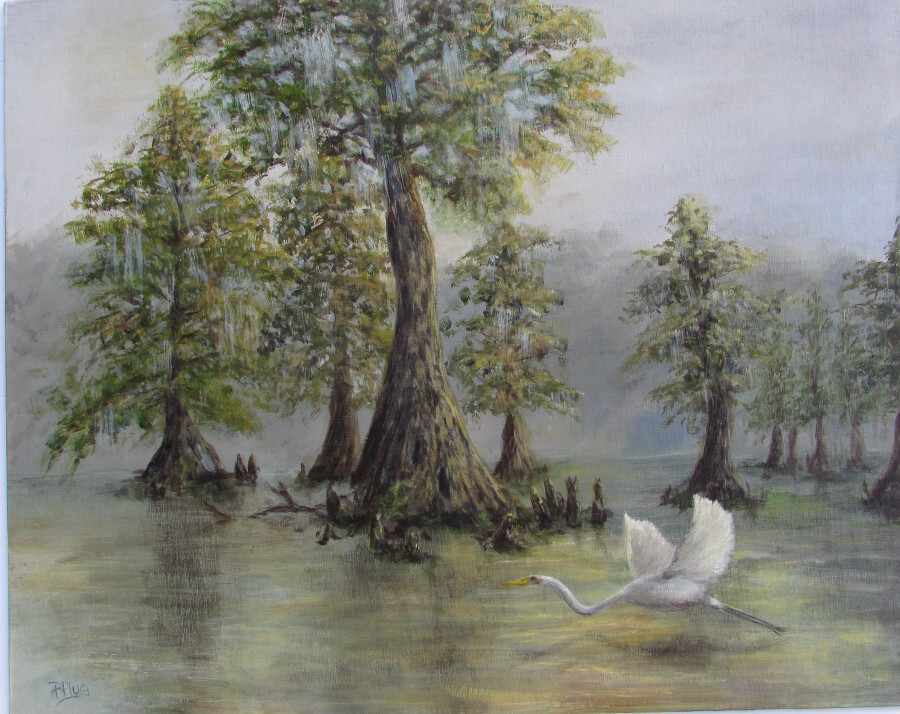
Lisa is right handed and she is thankful sarcoidosis has only affected her left hand, allowing her to pursue her passion as a painter. Here is one of her creations -- a flying egret.
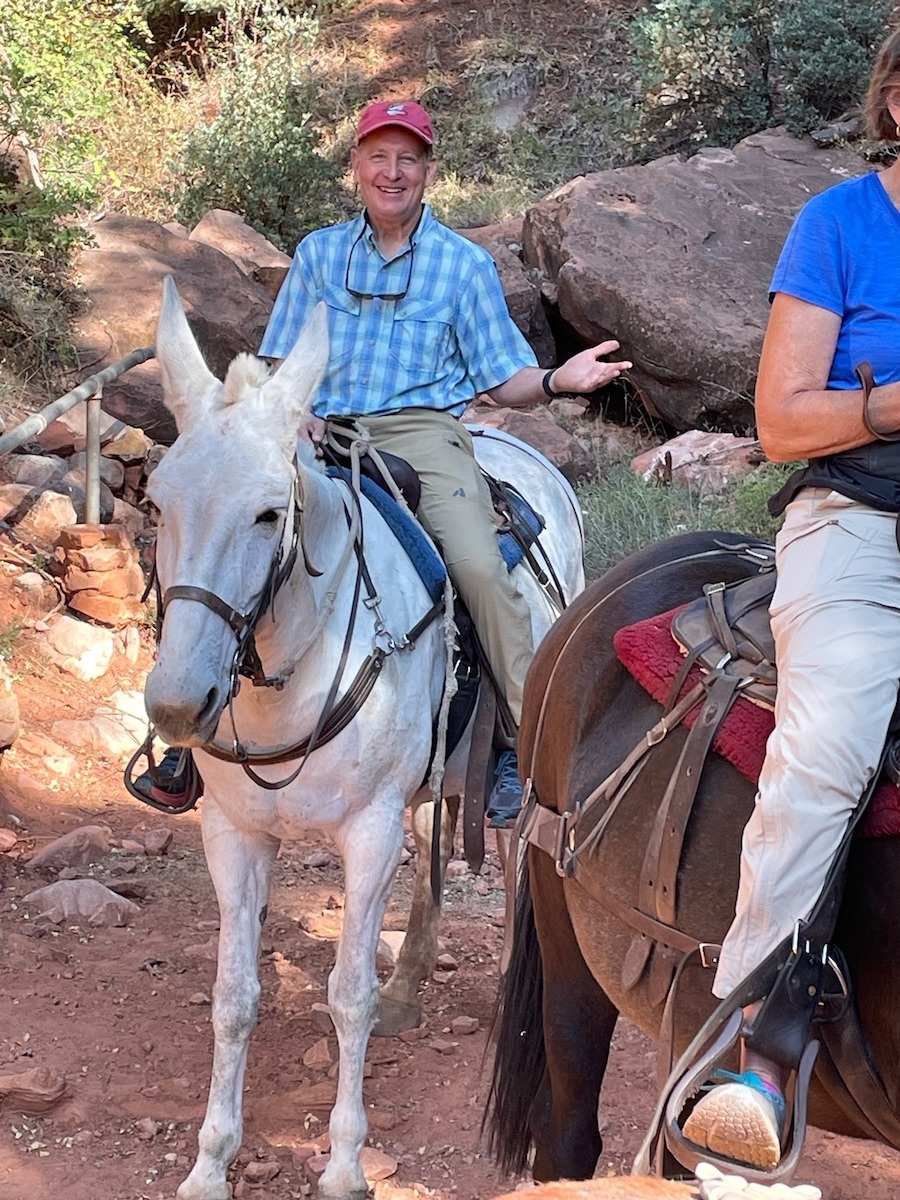
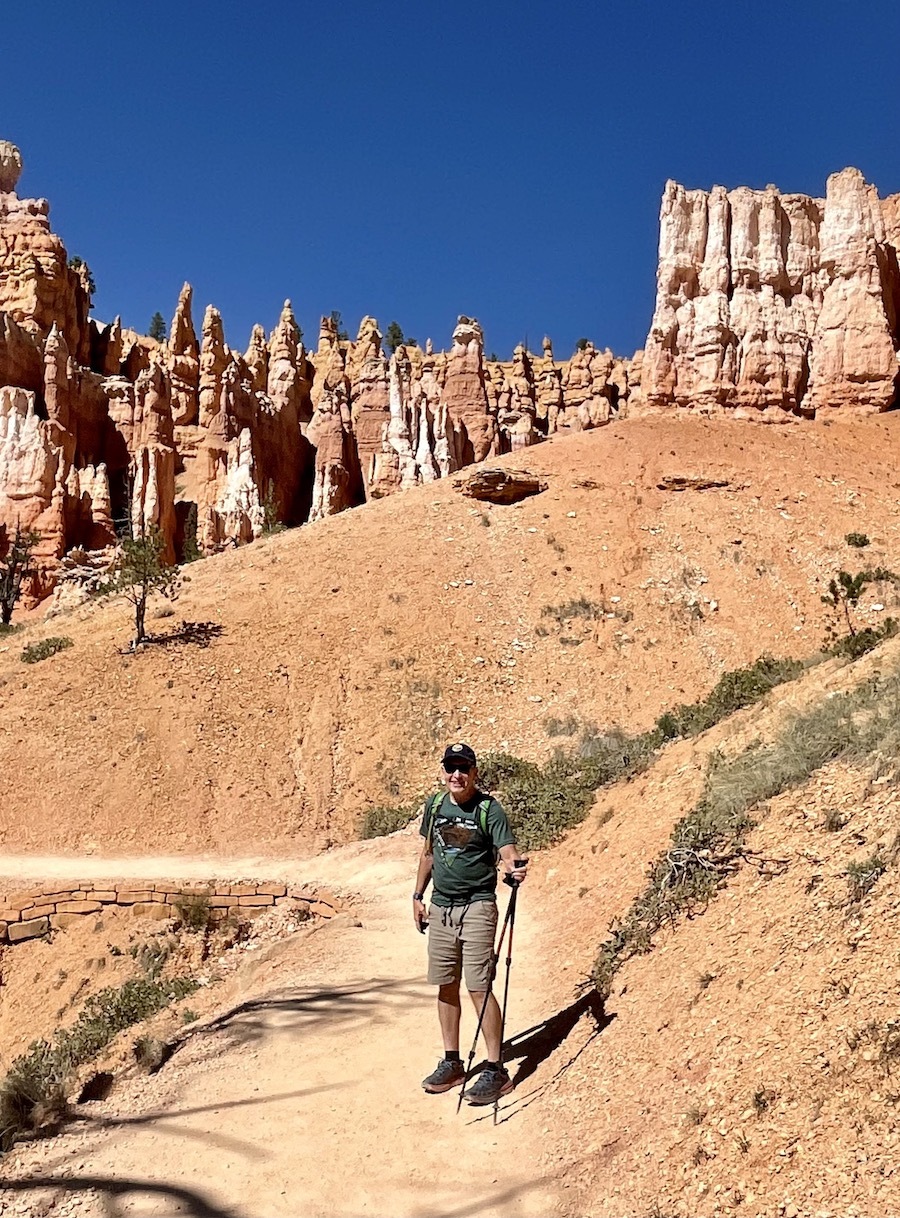
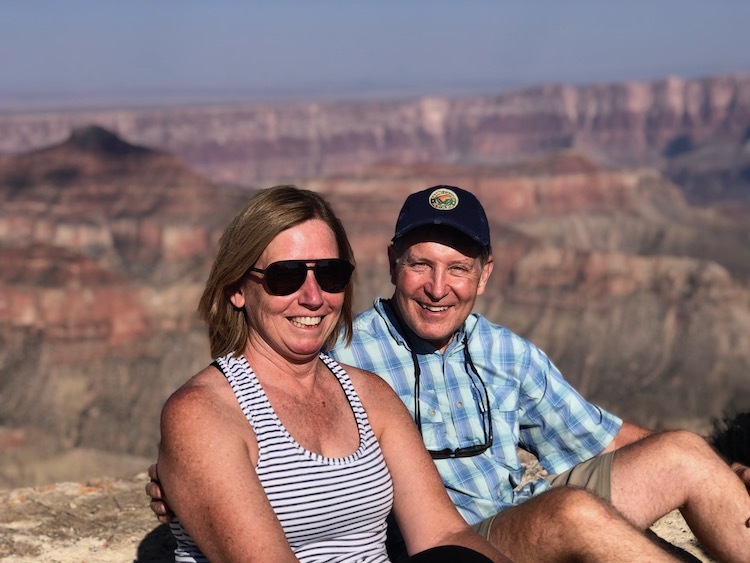
Promised links are below. But here are a couple of photos from my trip to Zion, Grand Canyon, and Bryce National Parks.
Read about the patient trial with aTyr 1923 https://investors.atyrpharma.com/news-releases/news-release-details/atyr-pharma-announces-positive-data-phase-1b2a-clinical-trial
Also -- Note that investors also believe in the promise of aTyr 1923: https://investors.atyrpharma.com/news-releases/news-release-details/atyr-pharma-announces-closing-863-million-public-offering
Bonus Episode on COVID-19 and Sarcoidosis https://beatsarc.podbean.com/e/bonus-episode-sarcoidosis-and-covid-19-presented-by-the-foundation-for-sarcoidosis-research/
Bonus Episode Sarcoidosis and Prednisone: https://beatsarc.podbean.com/e/bonus-episode-sarcoidosis-town-hall-dealing-with-prednisone-presented-by-the-foundation-for-sarcoidosis-research/
MORE FROM JOHN
Cycling with Sarcoidosis http://carlinthecyclist.com/category/cycling-with-sarcoidosis/
Watch the Prednisone Town Hall on YouTube https://youtu.be/dNwbcBIyQhE
More on aTyr Pharma: https://www.atyrpharma.com/
Do you like the official song for the Sarc Fighter podcast? It's also an FSR fundraiser!
If you would like to donate in honor of Mark Steier and the song, Zombie, Here is a link to his KISS account. (Kick In to Stop Sarcoidosis) 100-percent of the money goes to the Foundation. https://stopsarcoidosis.rallybound.org/MarkSteier
The Foundation for Sarcoidosis Research https://www.stopsarcoidosis.org/
Donate to my KISS (Kick In to Stop Sarcoidosis) fund for FSR https://stopsarcoidosis.rallybound.org/JohnCarlinVsSarcoidosis?fbclid=IwAR1g2ap1i1NCp6bQOYEFwOELdNEeclFmmLLcQQOQX_Awub1oe9bcEjK9P1E
My story on Television https://www.stopsarcoidosis.org/news-anchor-sarcoidosis/
email me carlinagency@gmail.com
S
Monday Aug 02, 2021
Monday Aug 02, 2021
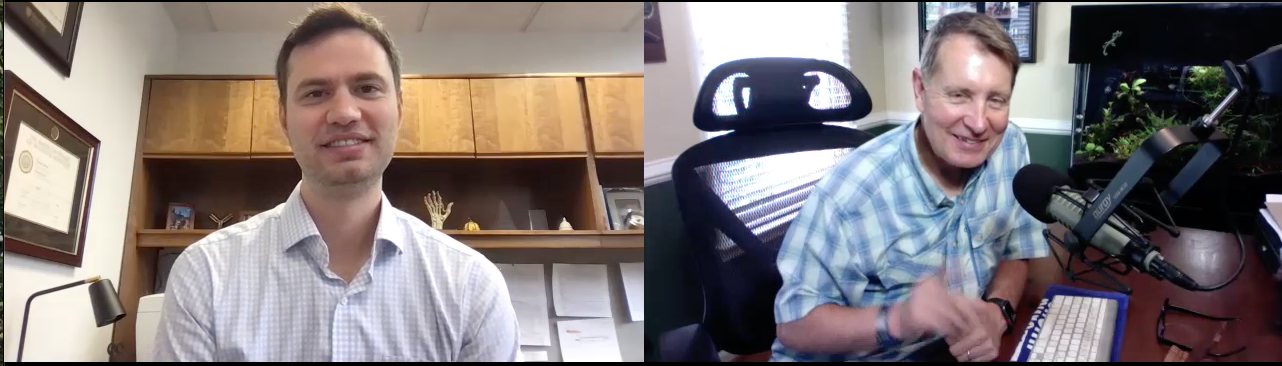
Dr. Matt Baker at Stanford University is studying Sarilumab also known as KEVZARA as a treatment for sarcoidosis. Sarilumab is already approved for rheumatoid arthritis, but it's anti-inflammatory properties make it a great candidate to treat sarcoidosis as well.
In this interview, Dr. Baker explains in layman's terms how Sarilumab works in your body to keep the autoimmune process from creating inflammation, which in turn causes many of the problems people suffer with sarcoidosis.
Matt Baker's bio and info: https://profiles.stanford.edu/matthew-baker
Matt's research on Sarcoidosis: https://www.stopsarcoidosis.org/sarilumab/
John's Moose Encounter! https://youtu.be/fXXTdVo90Zg
Bonus Episode on COVID-19 and Sarcoidosis https://beatsarc.podbean.com/e/bonus-episode-sarcoidosis-and-covid-19-presented-by-the-foundation-for-sarcoidosis-research/
Bonus Episode Sarcoidosis and Prednisone: https://beatsarc.podbean.com/e/bonus-episode-sarcoidosis-town-hall-dealing-with-prednisone-presented-by-the-foundation-for-sarcoidosis-research/
Cycling with Sarcoidosis http://carlinthecyclist.com/category/cycling-with-sarcoidosis/
Watch the Prednisone Town Hall on YouTube https://youtu.be/dNwbcBIyQhE
More on aTyr Pharma: https://www.atyrpharma.com/
Do you like the official song for the Sarc Fighter podcast? It's also an FSR fundraiser!
If you would like to donate in honor of Mark Steier and the song, Zombie, Here is a link to his KISS account. (Kick In to Stop Sarcoidosis) 100-percent of the money goes to the Foundation. https://stopsarcoidosis.rallybound.org/MarkSteier
The Foundation for Sarcoidosis Research https://www.stopsarcoidosis.org/
Donate to my KISS (Kick In to Stop Sarcoidosis) fund for FSR https://stopsarcoidosis.rallybound.org/JohnCarlinVsSarcoidosis?fbclid=IwAR1g2ap1i1NCp6bQOYEFwOELdNEeclFmmLLcQQOQX_Awub1oe9bcEjK9P1E
My story on Television https://www.stopsarcoidosis.org/news-anchor-sarcoidosis/
email me carlinagency@gmail.com
Sarc Fighter Facebook Page https://www.facebook.com/SarcFighter/
Sarc Fighter on Instagram https://www.instagram.com/thesarcfighter/
Monday Jul 19, 2021
Monday Jul 19, 2021
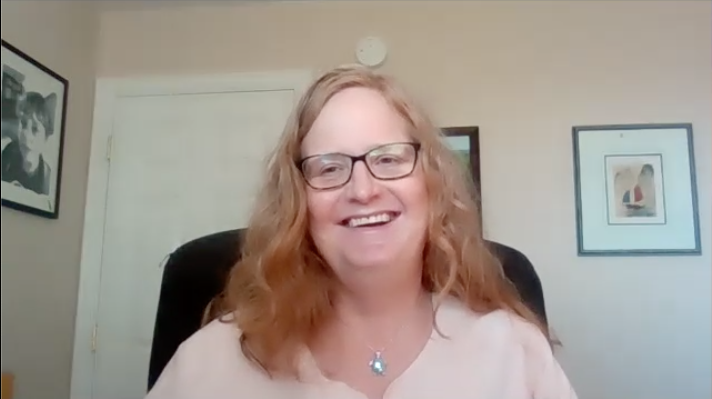 Rebecca Stanfel has been dealing with sarcoidosis for 17 years. Not just dealing with it, but at times, barely hanging on. All of this from a once world class cyclist, wife and mother who happens to have an amazing gift for writing. Her essays on living with sarcoidosis while struggling with the pandemic have been published in the Washington Post and HuffPost.
During the pandemic, Rebecca moved away from her family for eight months -- to ensure her immune system would not be compromised by her husband and son who were not able to quarantine simply due to their daily responsibilities. Rebecca has had such a tough run with sarc, to the point she has been bed-ridden for months at a time, that she could not risk getting COVID-19. In this episode of the Sarc Fighter Podcast, Rebecca talks about her writing, her decision to move out and the years-long struggle she has faced as sarcoidosis overtook much of her body.
Washington Post Essay: https://www.washingtonpost.com/health/pandemic-requires-patience-time-will-pass/2021/04/16/a75cdeea-9631-11eb-b28d-bfa7bb5cb2a5_story.html
Huff Post Essay: https://www.huffpost.com/entry/immunocompromised-covid-vaccine-cdc_n_60b043c9e4b04ddf13ebecd6
Rebecca's Blog Chronic Town: https://chronicville.wordpress.com/
Bonus Episode on COVID-19 and Sarcoidosis https://beatsarc.podbean.com/e/bonus-episode-sarcoidosis-and-covid-19-presented-by-the-foundation-for-sarcoidosis-research/
Bonus Episode Sarcoidosis and Prednisone https://beatsarc.podbean.com/e/bonus-episode-sarcoidosis-town-hall-dealing-with-prednisone-presented-by-the-foundation-for-sarcoidosis-research/
Cycling with Sarcoidosis http://carlinthecyclist.com/category/cycling-with-sarcoidosis/
Watch the Prednisone Town Hall on YouTube https://youtu.be/dNwbcBIyQhE
More on aTyr Pharma: https://www.atyrpharma.com/
Do you like the official song for the Sarc Fighter podcast? It's also an FSR fundraiser!
If you would like to donate in honor of Mark Steier and the song, Zombie, Here is a link to his KISS account. (Kick In to Stop Sarcoidosis) 100-percent of the money goes to the Foundation. https://stopsarcoidosis.rallybound.org/MarkSteier
The Foundation for Sarcoidosis Research https://www.stopsarcoidosis.org/
Donate to my KISS (Kick In to Stop Sarcoidosis) fund for FSR https://stopsarcoidosis.rallybound.org/JohnCarlinVsSarcoidosis?fbclid=IwAR1g2ap1i1NCp6bQOYEFwOELdNEeclFmmLLcQQOQX_Awub1oe9bcEjK9P1E
My story on Television https://www.stopsarcoidosis.org/news-anchor-sarcoidosis/
email me carlinagency@gmail.com
Sarc Fighter Facebook Page https://www.facebook.com/SarcFighter/
Sarc Fighter on Instagram https://www.instagram.com/thesarcfighter/
The following is a web-generated transcript of this podcast. Please excuse grammatical and spelling errors.
John Carlin: Coming up on the Sark Fighter podcast.
Rebecca: And I couldn't get out of bed. I mean, literally, I couldn't get out of bed. I couldn't walk. There were eleven steps from the bed to the toilet, and I would fall over more than once. I broke a wrist.
John Carlin: Cyber bribs The Sark Fighter brings you FSR patient advocate and writer Rebecca Stanford, who has recently published in the Washington Post and Huffington Post.
Rebecca: I was saying to myself, I was saying to my family, I was saying to the world, my health and my life are worth enough for me to do this.
John Carlin: Rebecca's, amazing, um, perspectives. Coming up next here on the Sark Fighter podcast.
Rebecca: This is the Sark Fighter podcast living with Sarcoidosis and other rare diseases. Here's your host, John Carlin.
John Carlin: Well, hello and welcome. This is episode 41 of the Sarc Fighter podcast, brought to you in part by a grant from a tire Pharma. I do this podcast to offer my fellow Sark Fighters hope. The official Sark Fighter song is called Zombie by Mark Styer and his band, the White Hot Lizards. You can hear Mark's story, the story behind his lyrics in episode twelve, and just tell me if you listen to that song, if it doesn't kind of paint a picture of your life. I call this the Sark Fighter podcast because I'm fighting Sark. And so are you. Whether you're a caregiver, a patient or researcher, it's a place where we all can gather. People tell me they feel like they're all alone. They don't know anybody else who has Sarcastosis. They can't find treatment for Sarcoidosis or maybe effective treatment or diagnosis. And I just want to let everybody know that there is a reason for hope. We talked to fellow, uh, Sark patients. We've talked to the top researchers in the United States, especially the last couple of episodes, people from places like Yale and Stanford and Sarcodosis UK. And really, the podcast has exceeded my own expectations in terms of its, uh, reach and the accessibility of the people who are really making a difference as all of us try to find a way to get through a life with Sarcoidosis. And I just have to tell you that we, uh, do release every other Monday. And as I'm speaking today, my trusty dog, my boxer Dougal, is settled on the, uh, chair that used to be my chair, but now it's his chair here in my office and he's all curled up in the studio and Google just makes my life so much better. But then again, I am a huge pet person. Now, today, it's all about a new perspective. My guest is an outstanding writer and she has broken through to some big time publications with her message about what it's like to live with Sarcoidosis. The Delta variant notwithstanding, when we talk about the COVID pandemic, we are emerging right now with about 70% of the US population being vaccinated, give or take. And I'm speaking to you in early July of 2021. And that's the best information I have right now. So it looks like the pandemic will be ending at some point sometime soon, unless the Delta variant or some other variant comes along and people continue to get vaccinated. But man, that was a tough haul for Rebecca Stanford, who is a voice for everyone who is immunocompromised by Sarcodosis. Or perhaps maybe the treatments that we all take to keep it at Bay, to the point where she moved out of her home for eight months so she could self quarantine from her husband and teenage son. And in The Washington Post, she wrote about that a little bit, and there was so much good information in both The Washington Post and the Huff Post. But I'm just going to read you an excerpt of what she shared with the world in The Washington Post. Rebecca writes, I hated being apart from them. I hated missing some of Andrew's final months at home before going to College. I hated not being able to hug them. I hated physically backing away from my son. I hated fearing for my life. But my years with Sarcaidosis made all this feel more possible. I'd learned that romantic love and parental bonds can hold up to long stays in the hospital, and I knew a confined and boring year wouldn't kill me. I had the emotional musculature in place already. If that's not somebody telling you how bad it is, but putting a shine on it, a positive spin on it all at the same time. I don't know what is. And there's just some fantastic writing and ideas being communicated in just a couple of sentences there. And that is Rebecca. She's, um, a philosopher, all right? As a writer, she knows the value of an analogy, and she takes exception to my use and really the common use of the term Sark fighter, or even Sark warrior. She thinks that using the language of war word like battle warrior, fighter make it more difficult to deal with a chronic illness like Sarcidosis. And actually, of course, that's just the opposite of the way I feel. I named this podcast The Sark Fighter Podcast. I open every time that I upload a new episode saying, because I'm fighting Sark, and so are you. And we're all going to get through this, and we're going to take, um, it to this disease. And when I go for a long bike ride, because I've gotten through a training session weeks and weeks of training, and I get a big bike ride done. And not only do I enjoy the fact that I was out there and I was enjoying the ride, but you know what? I took one back from Sarcodosis, which is trying to take one from me. So for me, it's all about the battle. But Rebecca makes a great, uh, case for her approach. And I will tell you quickly that she, of course, has had an extremely difficult run with Sarcodosis for, I think I want to say 16 years. Correct me if I'm, uh, wrong. It's 16 or 17 years to the point that doctors actually predicted she would leave this life long ago, that she would, uh, not live to see her son grow up. And yet here she is. And actually, for the last three years, she's actually kind of had things mostly under control. And all of this language and philosophy from a woman who at one point was competing to be on the US Olympic team as a cyclist. And she was right there in the late 80s. And Rebecca, uh, and I have so much to talk about. And all of it is coming up next here on the Sark Fighter podcast. Hi, I hope you're enjoying the Shark Fighter podcast. You may be wondering, what can I do to help? How can I be a part of the Sarqua dosas solution? It's simple. Make a donation to Kicks, kick in to stop Sarcoidosis. 100% of the money goes to the foundation for Sarcoidosis Research. Look for a link in the show notes of the Sarkfighter podcast. Welcome back to the Sark Fighter podcast. And joining me now is a fellow Sark fighter, although she might disagree with that term, Rebecca Stanford, who is a fellow advocate and works with FSR, but also an, uh, excellent writer. And she's been writing about her struggle with Sarkoidosis. Rebecca, welcome to the program.
Rebecca: Thank you so much for having me, John.
John Carlin: So you've been fighting Sarcodosis for a long time. Let me put it this way. I know you object to the term fighting, and we're going to talk about that. You have been plagued with Sarcodosis for a long time.
Rebecca: I have, yes. I have been living with Sarcore dosis for 17 years. I was diagnosed in my early 30s. I had just given birth to my son, who was three months old when I was first diagnosed way back in 2004.
John Carlin: So everything was going along swimmingly. And then what happened?
Rebecca: We were moving, um, back to our home in Montana. And I developed I'm sure a lot of people have the same story. I developed a nagging cough and bronchitis that wouldn't go away. So I ended up in the urgent care facility here where I live. And, um, got a call on a Friday night when they were closing. We read your chest X ray, and it looks like you might have Lymphoma. So call an oncologist on Monday. It turned out that I had Sarcoidosis, um, not Lymphoma. And at the time, I was incredibly relieved by that. And then over the next years, the disease progressed, first to my heart, where I have an AICD implanted, liver, bones, joints, skin, and most profoundly neurological, um, and now some gastrointestinal involvement. So I think of the disease is sort of hop scotching around my body.
John Carlin: And you have not been able to keep that in check?
Rebecca: Well, for the past three years, I'm knocking on something wood here. I have been able to keep it in check. Before then. It was pretty much a horror show of having, um, an illness affect one organ and switching drugs and then breaking through or the medication is not working. And then trying a different, stronger drug, progressing to doing high dose cytoxin, which is a cancer drug, spending months in the hospital with uncontrolled pain and vertigo and episodes of blindness. And then my last hospitalization was the summer of 2018. And I don't know if medications finally kicked in or if the disease has quieted down. I mean, I still have symptoms. I still have to manage it, but it's profoundly better than it was. But before that, it was 14 years of just sort of constant going from one to the other.
John Carlin: I want to pick through that a little bit. You said episodes of blindness. Can you tell me about that?
Rebecca: Yes. What would happen, um, is in 2007, I had aseptic meningitis. I didn't know it at the time. That was how the neurosurquoid presented itself. So it was just this unbelievable pain, like, terrible pain. And then my vision would just blank out for periods of time. Thankfully, very short periods of time, but it was completely terrifying. So I'd be laying that or I'd be getting up. So, um, fortunately, that has not been a part of my life for a while.
John Carlin: Would that last for a minute or two minutes or hours or what would be.
Rebecca: No, it would be minutes.
John Carlin: Okay.
Rebecca: Yeah. Wow.
John Carlin: And so that was sarcoidosis Was it on an optic nerve or somewhere in your brain that was blocking a signal or what was it?
Rebecca: The consensus was it was on, um, the optic nerve as well as I believe it was cranial nerve number eight, if I'm remembering, which is the vestibular ocular, which is what controls your sense of balance.
John Carlin: Wow. You have had a tough run. And then the cytoxin. I went through a year of the citoxin, uh, as well. That is no picnic at all.
Rebecca: No.
John Carlin: Did it work?
Rebecca: You know, it's looking back, it is so hard to tell. I mean, at that point in my life, I think if the doctor had said, here's a bottle of Drano, it's going to allow you to be the kind of mother that you want to be. It's going to allow you to function more. I would have chugged the drain out. It's hard to tell some of those drugs. The side effects are so profound. I don't know about with you, but I was getting it every other week, so I would get this dose, and then I'd come home and I'd be sick for five days, six days, seven days. I don't know. That said, the neurologic symptoms have retreated somewhat, and I'm more functional, as I'm sure so many of your people who listen to, um, your podcast. No, I mean, sometimes it's difficult to tell with this disease, with the medications. I don't know of many people who have been put on radicate or taken cells after methyltrexate or retoxin or thalidomide or actor, uh, who take it and say miraculously, oh, I'm cured, right? I don't think that's the typical course in my understanding. I could be wrong.
John Carlin: Yeah. And, well, you never know. You never know if you're cured or if you're just in a pleasant window for the next episode. So you've been three years. I'm going on two years, um, without a flare up. And although I have permanent damage, it sounds like you have some permanent damage. So you always feel like it's there. Um, but it's much better than a flare. What are you taking right now?
Rebecca: Right now I'm taking Axar. I'm, uh, still on ten milligrams of prednisone and I have low Immunoglobulin, which allows me to get IVIG monthly. I think my insurance, um, company would fight it, but the doctor I see says that he, um, thinks that the IVIG is very good in helping with all the nerve neuropathy issues that seem to be my main problem. So those three things.
John Carlin: All right, I want to go back in your life a little bit. You were a national caliber athlete?
Rebecca: Yes. When I was a teenager, I was a bit of a biking phenomenon. I was a track cyclist. Um, we lived in Baton Rouge, Louisiana, um, several national medals. I was at the Olympic Training Center for three times and I was a contender for the 1988 Olympic team. So, yeah, that's, um, in my background. And then I picked the sport up again in one year. We lived in Montana and just had fun racing in a kind of low key way. And it's been a real joy. In the past few months, I somehow, in the pandemic, found a new bike and it's been really just wonderful. I've been riding my bike around in a mellow, low key way. Rediscovering that joy I felt when I was 16 or 17. That sense of freedom and the wind in your hair. So I really enjoying.
John Carlin: Um, that when I've talked to people who led a very active lifestyle. And let's face it, if you live in Montana, you're not there to sit on the couch and watch television.
Rebecca: Um, correct.
John Carlin: And then along comes Sarquoidosis.sarcoidos And to me, it seems like such a limiting factor for people who really want to live that active lifestyle. Has it made like that cycling or that hiking or whatever you want to do in the great outdoors and big sky countries? It made it that much more difficult for you.
Rebecca: It was devastating. So I should also say that I gained £100 on the premise zone, which I've since lost. I think being on the predominant zone and being bedridden and having no pleasures left in life except eating. But when we moved to Montana, my husband and I, our way of interacting together as a couple, uh, and as a family was to hike. So we did long hikes. You've been to Glacier National Park? We did back country hikes and glacier into the Bob Marshall Wilderness. We live with hiking trails out our back door. So after work, um, we would meet for a run. I used to run up those trails, which is unlike me now. We're blessed with Lakes close to us. So lots of kayaking in the summer, cross country skiing in the winter. And then suddenly, that was just gone. And I couldn't get out. Um, of bed. I mean, literally, I couldn't get out of bed. I couldn't walk. I counted. There were eleven steps from the bed to the toilet. And I would fall over more than once. I broke a wrist. I broke ribs. And so people would say, oh, why don't you go for pretty drives? Drive up to the top of the path and look at the view. And it's not the same when you participate in something that you love, and it's this whole body experience. And you're with a person that you love, and you have those conversations when you're walking that you don't have just sitting around the house. It was devastating. Um, and I still don't, um, think we figured out a good way a second thing to do that was just as good as that for us. So it was hard on me. It was hard on my husband. It was hard on my son to lose that capacity.
John Carlin: I believe it. So your son. I'm doing the math. Your son's got to be around 17 years old.
Rebecca: He's 17. Yeah.
John Carlin: Okay. And he likes to do the outdoor stuff now he does.
Rebecca: And I feel like part of it was as he was growing up, it was just his dad taking him out. It pains me that I did not get to teach my own son how to ride a bike or how to ski. I'm a much better skier than my husband. Um, so for a while, I think he was kind of your typical preteen glued to video games. But now he's very active. He's a hiker. He's a rock claimer. So, um, it all worked out.
John Carlin: Yeah. We went through a similar thing. I have three sons, and we went through that similar phase. So I'm not surprised.
Rebecca: Um.
John Carlin: When you said you were trying to walk from the bed to the bathroom and you would fall at that point, which part of your body was failing due to sarcudosis?
Rebecca: It was all neurological. It was all the vertigo from the cranial nerves.
John Carlin: Got it. So you couldn't. Could you not feel your feet? Could you not guide your legs? What was happening?
Rebecca: It was like living on a ship at sea in a storm that was somehow spinning around. It was the most profound dizziness I have ever felt. And later I learned that I had neuropathy in the feet and probably I wasn't picking my feet up, but at the time, it was just this dizziness that I couldn't control.
John Carlin: It was dizziness. Wow. And so that's what made you fall down. So it wasn't like your legs weren't strong enough to carry you. You just didn't have the balance.
Rebecca: Right. And at the time, we lived in a house. We had to move because of the house. It just didn't work. So the bedroom that I slept in was on the second floor, and any kind of family the kitchen and eating area was down the flight of steep stairs, and the vertigo got so bad, I would crawl down those stairs to have family dinner. I mean, I could not walk down the stairs safely.
John Carlin: That is just amazing. But now you said you found a bike in the pandemic and you have the balance to get on a bicycle and ride.
Rebecca: Yes. And right now, I'm not having tremendous vertigo issues, which is great. Um, I also picked up wild ice skating, um, this last winter. So skating on some of our Lakes was sort of the longer blade speed skates, kind of across between cross country skiing and skating. I picked that up this winter, so I feel really fortunate. What is that, like heaven? You would like it. I think if you like cycling, you have no resistance on ice, so it's a sense of flying because there's no resistance.
John Carlin: Um, but it takes a lot of Vo. Um, two Max. You got to be able to breathe as if you were running. I would think, no, you have to have strong legs.
Rebecca: Um, well, I think if you could walk, you could do it, especially if you've ever been on skates before, like hockey skates or figure skates. And with those longer blades, it really isn't a lot of Max. Uh, one push on your skate will send you meters down the ice.
John Carlin: How, uh, do you get good, clean ice without snow on it and all that kind of stuff? Does that just happen naturally?
Rebecca: Luck if there's a cold snap before we get snow or if there's a thaw and then it refreezes, um, before snow. And then in a town near us in Butte, they actually have an outdoor speed skating track that they clean. So I got to practice up there.
John Carlin: Yeah, I think that's an experience that most people, uh, just got to live far enough north to be able to do that.
Rebecca: Look for videos on YouTube. They have an aerial video of some Montana skaters on wild ice that's taken from a drone. Uh, it's amazing, but it's definitely something. You need all the safety equipment, and you need to do it with people, and you need to do it with people who know what they're doing in terms of knowing the ice.
John Carlin: Um, right. Let's talk about your writing a little bit. So you are a graduate of Berkeley. Did you major in English or what did you major in?
Rebecca: No, I majored in the tremendously employable profession of medieval women's intellectual history.
John Carlin: Of course, those firms are always hiring.
Rebecca: What it did, in my defense, is it taught me. I think I got, uh, an education where I learned how to think, and I also learned how to write. Looking back, I really wish I had studied journalism, um, because Berkeley had a great journalism program. But you can't tell a 20 year old anything, as I'm sure you know, if you have kids.
John Carlin: Yeah, well, I'm one of those people who think that you go to College to grow up and to learn how to think.
Rebecca: Me too.
John Carlin: If you happen to major in something where you can get a job in that area, so much the better. But I think that the major reason to go to College for four years is to learn how to think. And I totally agree. Get a broad education and a little bit of knowledge about a lot of things to figure out how the world works. So that's my two cent and my wife and I disagree on that, but she majored, um, in accounting. She's, um, an accountant. It, uh, just worked for her, and she's very good at it. But, um, anyway, so you started, uh, writing about Sarcoidosis, and you've been published in a couple of big publications with some op eds. Uh, tell us about the two most recent.
Rebecca: The two most recent pieces. One was in the Washington Post. I've, um, lost all sense of time. I think it was like, a couple of months ago. And then I think last month was in half post.
John Carlin: Yeah, I read both of those. And you are just so articulate. Um, when it comes to telling the Sarkodosis story, what made you think I'm going to write about Sarcodosis, and The Washington Post is going to publish it?
Rebecca: Well, a little bit of background, so I was working as a writer and a journalist when I got sick. And then, of course, I lost one. Um, of the things I lost when the disease was very active in my brain was the ability to read text and to write. I still had issues reading a book. It slowed down a lot for me, the process of reading. So I wasn't, um, able to meet deadlines. So I wasn't writing. But, um, writing has always been since I was a kid. It's been my way to engage with my reality. It's a way to make sense of things. If I sit down and I want to write in my Journal or I want to write something, it's how I process. So gosh, I think it was 2008. I started a blog called Chronic Town where I just wrote about the experience of having this illness and being apparent to a young child. And, um, that kind of led. People said, oh, this is so great. You should try to get it published. So I had a couple of personal essays published in High Country News, which is a magazine. It's about life in the west. And, um, then people said, oh, you should turn it into a book, which didn't work as a process for, um, me. And then my son is growing up and I feel like I missed a lot of time with him with illness and being sick so much in the hospital. So I sort of decided a couple of years ago, I'm not going to worry about writing right now. I'm just going to focus on being a mom and being present in his life. When he deigns to speak to me, most of the time the door is closed. But when COVID hit, my doctor was very concerned, um, and he said, you're going to either need, um, to keep your son completely locked in his bedroom and not interacting in the world, or you're going to have to live somewhere separately. Unfortunately, we have the financial resources that I could live separately. So for eight months, I moved out of the family home and moved into an apartment across town. And suddenly I had a lot of time on my hands and writing was what I turned to. And I picked it back up. And I had so many feelings about covet as someone who was, immunocompromised, living in a state where people were burning masks down the street because they felt that was too much of an infringement to wear masks to protect people like me. And I just felt like I had to write. So all these ideas started coming out and I sent them off to different, um, places. And I feel really fortunate the Post took that I need to back up.
John Carlin: Because I know that you talked about this in one of your essays, but you were so afraid because, um, you're immunocompromised immunocompromised because of the drugs and because of Sarcodosis. So you moved away from your family for eight months, basically lived like a hermit.
Rebecca: Well, I come home for dinner in the summer. We'd have dinner on the deck because that was outside. And I go for walks outside with my husband Jay and my son Andrew. And then it got difficult in the winter. So we bought these giant air filters and I would sit in the living room and 10ft away, they were at the table and we kind of shouted each other across the room. And I was very fortunate to get an early vaccine. I had got an extra dose. So, yeah, I did move.
John Carlin: Um, out and that. I mean, just the decision to do that. I'm trying to envision how I would have approached that. I would have resisted that at all costs. I guess you just felt like that was the best path.
Rebecca: Yeah. I think part of it was watching my son struggle for those eight weeks when he was locked down, struggling with anxiety and not seeing his friends and being depressed and not being able to go out. Um, looking back, do I think we could have found a solution where we all stayed together? Yes. At the time, it was so freaky. And I think I already had this instinct from all the time in the hospital that when I'm sick, I'm the one that goes away, that we just sort of slotted into that. Um, but on the other hand, in, um, a lot of ways, it was a very empowering time because I was saying to myself, I was saying to my family, I was saying to the world, my health and my life are worth enough for me to do this. Okay.
John Carlin: So you're by yourself, you have a lot of time on your hands, and you start writing and what thoughts are coming to you that are motivating you to sit down and begin this process?
Rebecca: Well, I kind of became an amateur epidemiologist because I also had a lot of time reading to read everything about covet. And I love public, uh, health issues. I think what first motivated me was rage. It, um, was really the sense of there are other people like me who are either elderly or they're immunocompromised or they have some other risk factor. And there was a segment of society that just did not seem to care whether we lived or died. And I think that was sort of the first thing about writing, about my experience, about what is it like to have an illness and to be immunocompromised with this disease. We are not some small group of other. We are your families, your friends, your neighbors, your teachers. Um, so I think that was what kind of first got me writing and then you're a journalist. I'm sure you know this once your brain gets going with ideas, then that builds on other ideas. And that's just the process for, um, me.
John Carlin: Yeah. So you put that out there so that people hopefully would get the message that, hey, there's a bunch of us out here and you should care about us, and you need to be careful. Does A, did that work or B, did at least make you feel better that you got it out there?
Rebecca: It felt a lot better to get it out there and especially to get it published in a national publication, because there was that sense that, yes, as a writer, you innately believe that you have something worth saying. But it's also great when you get that affirmation from someone saying, yeah, this is something worth other people, um, reading and from both of the publications, the overwhelming response I got from kind of online comments was positive. Other people with circuitosis, especially in the Washington Post, um, writing, just saying, thank you for I've never read anything about Sarcoidosis in a major newspaper. Thank you. Which I found really interesting, just that notion. And it's something that I felt with a blog even way back then of just that aloneness with a rare disease.
John Carlin: So you had an epiphany. Um, and I want to talk about this because the name of this podcast is the Sark Fighter Podcast. And you and I both volunteer with the foundation for Sarcodosis Research, and they are fond of calling all of us with warriors. So we have the word warrior, and we have the word fighter. And for me, it is a determination to fight back against what's restraining me. And you have come to terms with language that says, it's not biting. Tell me about that.
Rebecca: This is by saying, I think we all have different thought for how we deal with everything in our life. And what I'm saying right now, I do not mean as a judgment against you or anyone who likes to use images of war thinking about illness. It's something that was very important to my thinking about illness as well. For over a decade. As I said, I got diagnosed when Andrew was three months old. And the first thought that came into my head was, I'm going to beat this. I'm going to fight this. I'm going to live to see my son grow up. And I had doctors who told me otherwise. You know, I had an electrophysiologist. My son was 910 months old, saying, oh, you could drop dead at any moment. He would say very casually. And when Andrew was two or three, I had another doctor say, well, you're not going to live to see your son graduate from high school, but at least you know what you're going to die of. Like, a lot of people don't have that. And he offered this to me as a sort of comfort. So for me, the stakes were very high. The stakes are very high for all of us. Life is something we want to hold on to. And I think in our culture, when the stakes are high, we turn to the language of war. We have the war on drugs. We have the war on cancer. Lyndon Johnson had the war on poverty. And I think what war conveys is you're giving it everything that you've got, and it's very important. And this is something, um, that I thought this way, too, for a decade. At the time, I had a therapist. She was a little old lady who is a cancer survivor, a former beatnik. And she would tell me when I would go in, um, for my cytoxin, and she would say, I want you to visualize every molecule of that chemo going into your body as a nuclear warhead. That's going to destroy the problem that's going on.
John Carlin: This is a Beatnick telling you this.
Rebecca: Yeah, in a cancer or nerd lived with cancer. And all this time I'm fighting the disease. Right? I'm tired, but I'm going to fight to get out of bed. I'm going to fight to be with my son. I'm going to fight to make it down the stairs to dinner. I'm going to fight to watch a television show. What happens if you fight and you can't do it? How do you feel about yourself then? So one day, I was getting cytoxin, and my body reacted to it horribly. So I had to get huge doses of ibbenadryl. And I'm sitting there in my Benadryl haze, watching the stuff drip into me slowly, and I'm thinking about what my therapist had said, that this is like it's a war. I'm going to win this war. And I had this epiphany. And I think this is especially true for a disease where it's your own immune system is a component. Like, I am both the aggressor and I am the battlefield. So I'm dropping these nuclear warheads into my, um, body, and yet I am the field into which they land. And that kind of put me on this path of thinking about how do we as individuals and how do we as a society think about illness? And this is clearly not something that's unique to Sarcoidosis. If you read Most Obituaries, where someone has died of any kind of illness cancer, Alzheimer's, multiple sclerosis, covet, uh, they'll say so and so fought valiantly, and he lost his battle with blah. And I don't like the thought that you're a loser if an illness kills you. So when I was in College, in one of my, um, classes, we had to read Susan Sontag's book, Illness as a Metaphor. It's a very famous book. It's kind of a philosophy of the Illness book. And sue, the writer, had cancer, and she got very frustrated with sort of the metaphors people use to talk about illness. And for me, it just stopped working to think about it in that way. I was down on myself. I was depressed. I felt like I was a loser. I felt like I wasn't trying hard enough. Even the way that some of the doctors, if they give you a drug and it doesn't work, you fail the drug. Right. I mean, that's the language that was getting used, and it just wasn't working for me. So, I don't know, for a while, I was sort of casting around for how do we think about illnesses? And I still don't have a great answer, how to envision an illness if you're not going to use the language of war. But for me, personally, I now think of myself as living with Sarkoidosis. I don't believe that I'm ever going to get magically cured in this disease is going to just go away. Like, I think I will be living with symptoms. I'll be very happy if that happens. I'm not trying to be a Downer, um, and say it's never going to happen. But for me, I feel like I need to just take every day that I have in front of me as a gift. Every day when I'm functional, every day when I'm able to do the things that I can, then I'm living with this illness to a certain extent. I'm sharing my body with this disease. And for me, it has allowed me to get the rest that I need. It has allowed me to try to find some balance. Before this, I'm sure we've all done this. This was my pattern. It would be like I'd feel okay one day. So I would do everything I could, everything I could. And then I couldn't get out of bed for a week, and I feel horrible about myself, and I'd feel like a loser. So for me, I've kind of been on this journey. I'm, uh, still thinking about it. I'm doing research now into theories of metaphorical thinking. Why is it that we need metaphors? What purpose do they serve to think about? How do we, as individuals living with a disease and how do we, as a larger society, want to do serious and chronic illnesses?
John Carlin: Has it helped your mental health to adopt this approach that doesn't use the language of war?
Rebecca: Tremendously. It has, like I said, because I think this is part of it, too. As a former athlete, as someone that was used to thinking of my body as a tool, as something that I could push so suddenly to push and, um, wind up in the hospital, instead of pushing and winning this phase of the illness, it was profoundly depressing for me. I have found a lot of relief in that notion that I live with Sarcoidosis. I don't like Sarcoidosis right now. I'm living with Sarcoidosis, and I have to manage it. So, uh, I think of myself more like a manager of a difficult work, uh, crew. Some of who, uh, want to do their job and some of who want to run around and meet granuloman places. I don't want it to. But I'm the manager, right? And I have to learn how to function as best I can in this body now.
John Carlin: So when you get out on your bike or when you're doing the ice skating, don't you just feel a little bit like I just beat Sarcoidosis? I stole one from Sarcodosis.
Rebecca: No, I feel so lucky. I feel so fortunate to whatever it is, the drugs, to the prayers that people have sent me. From different religions to the randomness of the disease being in a process of less activity. I feel joy on the bike if I feel anything related to the disease. Sometimes I feel not angry, but just that sense. Like, 20 years ago, I could have written off this path. And now I'm just out writing for an hour, but I really try to stay grounded. What can I do today, and what can I do today that's going to allow me to do something tomorrow, right? So, sure, I'd love to go out and do intervals on my bike, but then I'll be in bed for three days. So what can I do today that will allow me to be present in my life tomorrow that will, um, allow me to function the next day, if that makes any sense.
John Carlin: Sure. I've talked to some people who, um, are on the podcast who are in that state right now, where you have been at various times, uh, where for whatever reason, whether it's pulmonary, whether it's cardiac, whether, um, it's neuro, their activities are extremely limited. So gardening for 15 um minutes is a victory. I hear that there I am using the language of winning and losing again, but I still sense that there's that determination.
Rebecca: Um, it's the determination.
John Carlin: But the journey is the destination, and you're not stopping to smell the roses along the way. The roses may be the destination.
Rebecca: Yeah. And if anyone wants to go read 4000 blog entries, this has been something I've been working on the entire 17 years, because I am a high achieving person in everything that I do. I'm very goal oriented. And so this notion that, okay, I'm going to work on an article today. I'm going to work until I'm tired. I'm not going to work until I finish it. I'm going to work until I know I've reached what I can do. I'm going to do that 15 minutes of gardening. Right? I'm not going to do my whole yard. That has been a work in progress for me, and it remains a work in progress to try to stay in the day that I'm in, not in the past. I think all of us deal with a lot of trauma from past medical experiences, and I think we all have a lot of anxiety about the future. Even if you're doing better, I'm sure you feel that sense of when is that other shoe going to drop again? And what am I going to do when it drops? And so try not to live with that, but also, um, be smart enough to have plans in place for when that happens.
John Carlin: If that happens, how do you balance that? The other shoe could drop any day. I got to go have some fun right now while I can, but at the same time thinking I don't want to have too much fun because I don't want to cause the other shoe to drop. How do you find that balance?
Rebecca: Work in progress every day is something I think I'm negotiating, I'm figuring out. I mean, two weekends ago, my husband and I have not been on a vacation, and we used to be avid travelers since the pandemic started. And he's been really busy with work. So we drove 5 hours to Standpoint, Idaho, and we stayed for a long weekend, and we went for a bike ride one day. We went for a hike the next day, and we went kayaking next day. And he knows and I know that I was going to come home and I was going to spend the next day in bed. So, I mean, there are those times where have you heard of that? I think her name is Christine Mizarondo, the writer with the spoon theory.
John Carlin: I have not.
Rebecca: Oh, well, you and your listener should go Google this. It's the spoon theory. She had a, um, different chronic illness. But it was the notion that everybody from the most healthy teenager to somebody who's debilitated with an illness, we each have a certain amount of energy. And the way she envisioned it with spoonfuls of sugar. So my son and everyone has to figure out how many spoons they have. So my son Andrew might have 50 spoons a day. I might have five. Right. And you need to figure out what's my energy capacity and how do I want to spend it. I thought it was brilliant, what you put together. And she put it forward much more articulately than I did. And it's easy to find on the Internet.
John Carlin: All right. And we'll put a link in the show notes. It's not too much different than what I looked look at. Which is, I don't play video games, but my son certainly did. And you start out as you're fighting, and you've got a lifeline up there, right? And every time the bad guy hits you, you lose a little bit more of that lifeline. And then when you lose your entire lifeline, the game is over. And so I look at it, I start every day with this lifeline, and, um, everything I do is subtracting from that just a little bit. And then at some point, it's over. I was doing yard work this weekend. I was amazed that I was being so productive. I was raking some leaves left over from last winter. And I mowed the lawn, and I washed and waxed the car. And I kept thinking, man, it's like my lifeline is just not diminishing today. And I walked in the house, and it was like, boom, I was just done. And I said to my wife and my son's coming over for dinner, I said, I need a 15 minutes nap or I'm not going to make it through the night. And I just went from full blast to asleep. But that's the same thing with the spoon thing.
Rebecca: It sounds like the same thing. Exactly. You have the same thing? Yeah.
John Carlin: Holy cow.
Rebecca: I think an advantage. It sounds like that you have and that I have is having people in your life that understand that. And that's what would break my heart. On the blog, I get comments from people with different illnesses saying, oh, my family thinks I'm a Faker. Right. They don't look sick. Right. So you just must be lazy. And so I think it's a sense of blessing, for lack of a better word, that you have a wife, and I have a husband. I have a son that understands that when I come in and say, I need to take a nap, it's not laziness.
John Carlin: Right. And as a high achieving person, you have to convince yourself it's not Laziness.
Rebecca: Oh, yeah. That's the first person you've got to convince.
John Carlin: And that is very tough. I want to ask you if you have ever asked yourself, Why me? Here you are, up until sarcadosis strikes. You are an elite athlete. I mean, you're at a training camp with Lance Armstrong.
Rebecca: Yeah, right.
John Carlin: And you're at Berkeley. So obviously you've got some academic game. You don't just walking into Berkeley. So, uh, you're smart, you're athletic, you're doing all this stuff, and all of a sudden, bang. Do you ask yourself, Why me?
Rebecca: I used to a lot. I used to constantly. I used to. And then I would go back and I would try to figure out because the current or. I don't know if it's current anymore. But at the time, the thinking was with Sarca doses, that you had a genetic predisposition to the disease. And then there was some kind of exposure that would happen, whether it was a toxin or a virus or something that would set off the disease. And I would go back and I would think, was it because I went to high school in Baton Rouge, Louisiana, and the shadow of the oil refineries was at that time that I went to flea, sprayed a yard in California instead of flee sprayed myself. So I was covered in insecticide. And I honestly think what helped me deal with that end of it was getting treatment at the cancer treatment center, where you see people from seven year olds to 97 year olds who have an illness. Why? I don't know. Why are some people born into poverty? Why are some people? I just think for me, I've had to embrace the randomness of the universe, and that spending a lot of time thinking, Poor me. Why did this happen to me? It's just not helpful for me.
John Carlin: I have to say I agree. But I also think that healthy people should be able to Dodge some of the pitfalls that not healthy people have. And you're doing everything right. And it still gets you. And to me, because I'm not as high achieving as you. But it just felt like I'm living a clean life. I'm living a good life. I'm not abusing my body, and I'm fit, and I'm running, um, marathons. And all of, um, a sudden boom. And it just seemed like I was the most unlikely person. To me, it seemed that way.
Rebecca: No, I felt that way too. But then if you spend time in any kind of illness community, you see that there's so many people like that. And you have to like, for me, I just remember for cancer and who knows what it's like with Sarca doses. Hopefully, the researchers at FSR is funding, are going to figure this out. But it's one random mutation in a cell, right? So, yeah, we're setting ourselves up for success. Eating our five servings of veggies and getting our exercise and getting a good night's sleep. But I know some people derive a lot of. And I don't mean to denigrate that when they talk about the randomness of the, um, universe. I know faith is very, uh, important for some people, and I don't mean to speak that that isn't a way to think about it for me. I don't believe that any kind of God or any kind of force made me sick for a reason. But I do think there is so much that we can learn from illness, that we can learn from hardship, that can make us better people, that can make us more compassionate and more empathetic. And that's, I think, where I try to focus on the why me? Um, I don't know, but what am I going to do with it?
John Carlin: You mentioned already that illness is a metaphor, which is a book. But you also, uh, in one of your emails to me, uh, before we began talking today, um, talked about the history and the need for a metaphor. What was that all about?
Rebecca: Well, I'm no expert on this. I'm just starting to do some reading and some research. But I'm sure, you know, when we're in elementary school and, um, high school, we learn a metaphor is a literary device that we use as a comparison. So you're busy as a Bee or you're a solid Oak tree, right? So it's this comparison. There's been a lot of research, I think, starting in the 80s, that metaphors are not just a way to compare something in a piece of writing, but that what a metaphor does is it takes an abstraction like illness, like poverty, like drug use, and it connects it with something concrete war, so that our brains actually process information and can do that higher level of abstraction by using an internal metaphor. So by comparing illness to something else, we take that abstraction and we can make sense of it, if that makes any sense. And that's part of our brains that evolved over time and that allows us to have these higher conceptual ideas.
John Carlin: We say, all right, I'm going to fight Sarcidosis, and I'm at war with Sarcidosis, and that's a way of helping us understand. But maybe we're jumping to the metaphor. That's just too easy.
Rebecca: Like I said, it's certainly a metaphor. It's certainly a way of thinking that conveys all out effort. It conveys intensity, and it conveys high stakes. And I think it's a metaphor that's floating around out there in our society. Right. We have the war on drugs. We had the war on poverty. I think it was Reagan or, I don't know, the war on cancer. Right. And I don't think it's just for people that have illness. I think it's the broader society uses these metaphors and finds comfort and finds a way to think about them as well.
John Carlin: So what's next for you? Will we see you popping up in the Washington Post again? Or HuffPost, or are you still putting stuff out there?
Rebecca: Yeah, I don't want to get put into a niche of only writing about covet and how hard it is to live with covet when you're immunocompromised. So I have an essay I'm working on about returning to the bike in middle age. Um, the joys, like I was talking about. Um, I have an essay that, um, I'm working on about just this topic about how do we, um, think about illness as a society and what are the benefits of the ways we think about it now, and what are the pitfalls of it that I'm hoping to send around with writing? It's just a process that you send, um, things out and you get rejected, and then you send them back out. So hopefully you'll see, um, me out there again soon.
John Carlin: Well, I certainly wish you all the best. And I can't tell you how much I've enjoyed this philosophical approach to Sarcoidosis and how much I appreciate you being willing to share your story with the, uh.
Rebecca: Thank you. And I'm honored to have you bond. It's such a great thing that you're doing. Thank you. Thank you for having me. Um, um, uh.
John Carlin: Remember, Rebecca is an advocate, an avid volunteer for the foundation for Sarcodosis Research, along with me and many others. But she wanted me to be sure to tell you that all of the opinions expressed are her own and not those of FSR. And I would add the same for myself as well. But can you imagine being told by your doctor you probably wouldn't live to see your son grow up? Can you imagine moving out of your home to be safe during the pandemic? I've heard of people kind of staying in their rooms or keeping distant or wearing masks. But moving out of your home on your doctor's orders, that had to be so difficult. And then think of the loss that she, uh, must have felt going from a world class athlete to bedridden. And then, as she writes in some of her essays, missing years of her life dealing with Sarcudosis. And then she just talked a little bit about how Sarcoidosis prepared her for the difficulty of the Pandemic. So, yes, she was more at risk, but she also already kind of knew how to deal with this kind of difficulty. And then what do you make of her argument that we're not fighting Sarcudosis. We are not warriors. We are simply living with our bodies, which happened to have a flaw for an unknown reason. And she can chalk it up to the randomness of the universe. I'd really like to see some comments on this, and I think it's a wonderful perspective. It's not my perspective. I feel like I have to battle it. I feel like everything I do is in some way trying to get ahead of whatever Sarcodosis wants to do to me. In my thinking, that's a battle. But I'm not saying she's, uh, wrong, and I really appreciate her perspective. It's a new way to think about, um, it. And I just want to know what you think. So if you want to leave me a comment on it, and if I get a bunch of comments, I'll be sharing them in future Sarkfighter podcast. And then, of course, we want to thank Rebecca for all her work with the foundation, uh, for Sarcodosis research, and for her ability to so eloquently spread the word to the rest of the world about Sarcoidosis and for her continuing to do so. Now, if you're new to Sarcodosis, trying to figure out what you have, what's going on in your body, go back and listen to episode two. My interview with Dr. Simon Hart, and he basically goes over Sarcoidosis 101, tells you everything about Sarcodosis, the best that we know about what's causing it, why there's no cure, what's happening to your body, why it can invade any part of your body. All of that is back in episode two. And if you want to know more about me and my backstory, it's in episode one. I'll tell you. A recent release is an interview with Leo Casimo, who heads up Sarcodosis UK. And if you're listening in the UK, I'm so happy to have you aboard. But if you're looking for answers about what's going on in the UK, check out episode um, 38. And then I'm just coming off two episodes featuring some of the top Sarcoidosis researchers in the world. And if you are looking for hope, check out episodes 39 and 40 with Dr. William Damski of Yale University and Dr. Matt Baker of Stanford both making promising inroads and studies of new ways to beat the effects of Sarcodosis, creating medicines and treatments that, if they get all the way through, could be on label and specifically targeting Sarcodosis, which, as I speak right now, almost every drug that anybody takes for Sarcodoses, even the common ones like methatrexate, are off label. In other words, they're not drugs that were developed specifically for Sarcoidosis. And everybody knows that when you get to some of the more expensive drugs, the insurance companies throw up as many walls as they can. They don't approve it until your doctor writes numerous appeals. And then, uh, you get the medicine typically. Usually. Although I just talked with somebody who's been on the podcast recently who needs Remicade, and, uh, his insurance company change. And now he's going four months, um, without Remicade, because his, um, insurance company, his new insurance company won't approve it because it's what they refer to as being off label. So the fact that Doctors Baker and Damsky are making progress, as well as ATAR and some other companies that we've, um, talked about, are, uh, making progress with Sarca dosage, specific treatments, which will be, quote, unquote, on label if they're all approved, is just amazing. So you're going to want to go back and listen to those and I will say that all these doctors, even though their expertise is, uh, beyond this world, they did a great job of keeping the conversation in layman's terms and I think you want to go back and listen to those please. Also don't forget to go back and listen to the bonus episodes um, on Sarcoidosis and COVID and also a special, um, one on Sarcodosis and prednisone and just how hazardous it is to take prednisone even though it is the very first thing that doctors recommend, it is still the best treatment for Sarcoidosis for the short term. But anyway, there was a whole town hall on that and I moderated those that those are back there so those are listed as, um, bonus episodes and their opportunities. All the right people came together in the room at one time and you can figure out what's going on with that. Also, if you ever want to send me an email, it's in the show, notes Carlinagency at um@gmail.com, you can follow the Sarkfighter with the word the in front of it on Instagram and also Sarkfighter on Facebook. I have a Facebook page and I post updates, uh, and hopefully some interesting insights, things like Rebecca's op eds. I have links to those in there and have done that over time. I appreciate your interest in the SARC Fighter podcast. It just helps, uh, me reach more people and grow the show and if you would share it on your social media, it's much appreciated. And if you like the podcast, please tell just one person and if you would like give the show a nice review on Apple podcasts. Thanks again to Rebecca Stanfield for joining me here today and for sharing her insight and her perspective. And let's hope that she continues to write and to share the message and spread the message of what we're all dealing with with Sarcoidosis. Until next time, keep fighting.
Monday Jul 05, 2021
Monday Jul 05, 2021
Dr. William Damsky, MD, Ph.D., is a leading researcher at Yale University. He is pioneering a study using the off label drug, Xeljanz (say:ZEL-janz) to fight sarcoidosis of the skin, with so far - great success. Damsky and his team have been able to make disfiguring cases of dermatological sarcoidosis disappear in a handful of cases. They are now moving ahead with a more robust clinical trial to see just how promising this treatment may be -- perhaps for sarcoidosis in other parts of the body as well.
In this Episode of the Sarc Fighter podcast, Dr. Damsky explains in easy to understand terms how this drug works within the body to block the autoimmune response behind sarcoidosis.
William Damsky MD, PhD Bio https://medicine.yale.edu/profile/william_damsky/?tab=bio
Xeljanz https://www.xeljanz.com/
Background on the study at Yale School of Medicine https://medicine.yale.edu/news-article/yale-experts-treat-severe-disfiguring-sarcoidosis-with-novel-therapy/
Bonus Episode on COVID-19 and Sarcoidosis https://beatsarc.podbean.com/e/bonus-episode-sarcoidosis-and-covid-19-presented-by-the-foundation-for-sarcoidosis-research/
Bonus Episode Sarcoidosis and Prednisone https://beatsarc.podbean.com/e/bonus-episode-sarcoidosis-town-hall-dealing-with-prednisone-presented-by-the-foundation-for-sarcoidosis-research/
Cycling with Sarcoidosis http://carlinthecyclist.com/category/cycling-with-sarcoidosis/
Watch the Prednisone Town Hall on YouTube https://youtu.be/dNwbcBIyQhE
More on aTyr Pharma: https://www.atyrpharma.com/
Do you like the official song for the Sarc Fighter podcast? It's also an FSR fundraiser!
If you would like to donate in honor of Mark Steier and the song, Zombie, Here is a link to his KISS account. (Kick In to Stop Sarcoidosis) 100-percent of the money goes to the Foundation. https://stopsarcoidosis.rallybound.org/MarkSteier
The Foundation for Sarcoidosis Research https://www.stopsarcoidosis.org/
Donate to my KISS (Kick In to Stop Sarcoidosis) fund for FSR https://stopsarcoidosis.rallybound.org/JohnCarlinVsSarcoidosis?fbclid=IwAR1g2ap1i1NCp6bQOYEFwOELdNEeclFmmLLcQQOQX_Awub1oe9bcEjK9P1E
My story on Television https://www.stopsarcoidosis.org/news-anchor-sarcoidosis/
email me carlinagency@gmail.com
Sarc Fighter Facebook Page https://www.facebook.com/SarcFighter/
Sarc Fighter on Instagram https://www.instagram.com/thesarcfighter/
Monday Jun 21, 2021
Monday Jun 21, 2021
Sarcoidosis UK is doing its best to fight sarc in the United Kingdom. The organization is small but mighty and looking to grow its influence as it raises awareness about the disease and reaches out to patients to offer them help in a confusing sarcoidosis world.
 In Episode 38 of the Sarc Figher podcast, Leo Casimo, Senior Executive, joins in from London to talk about the efforts of Sarcoidosis UK , and how patients there are coping with the disease while tryng to help one another and raise awareness for research.
Here's a link to Juliet's fundraiser and story: https://www.justgiving.com/fundraising/julietcoffer
Sarcoidosis UK https://www.sarcoidosisuk.org/
Bonus Episode on COVID-19 and Sarcoidosis https://beatsarc.podbean.com/e/bonus-episode-sarcoidosis-and-covid-19-presented-by-the-foundation-for-sarcoidosis-research/
Cycling with Sarcoidosis http://carlinthecyclist.com/category/cycling-with-sarcoidosis/
Charlton's blogs https://sarcoidosisnews.com/category/no-tears-for-sarcoidosis-a-column-by-charlton-harris/
My probiotic Just Thrive https://justthrivehealth.com/products/probiotic?variant=25256665251940
The Omega 3 product I have been taking https://www.nordicnaturals.com/consumers/
Just so you know I am not affiliated with any of these companies in any way. I talked about these products in the podcast so I'm sharing my information with you. I buy them on line or in the store and pay full price!
Watch the Prednisone Town Hall on YouTube https://youtu.be/dNwbcBIyQhE
More on aTyr Pharma: https://www.atyrpharma.com/
Do you like the official song for the Sarc Fighter podcast? It's also an FSR fundraiser!
If you would like to donate in honor of Mark Steier and the song, Zombie, Here is a link to his KISS account. (Kick In to Stop Sarcoidosis) 100-percent of the money goes to the Foundation. https://stopsarcoidosis.rallybound.org/MarkSteier
You can listen on You Tube as well. https://www.youtube.com/watch?v=MCbA3EDJ6Ak&list=OLAK5uy_ktdC7Pn7_ezhy4ZJzV_u7o76bqIv6cC6o
The Foundation for Sarcoidosis Research https://www.stopsarcoidosis.org/
Donate to my KISS (Kick In to Stop Sarcoidosis) fund for FSR https://stopsarcoidosis.rallybound.org/JohnCarlinVsSarcoidosis?fbclid=IwAR1g2ap1i1NCp6bQOYEFwOELdNEeclFmmLLcQQOQX_Awub1oe9bcEjK9P1E
My story on Television https://www.stopsarcoidosis.org/news-anchor-sarcoidosis/
email me carlinagency@gmail.com
Sarc Fighter Facebook Page https://www.facebook.com/SarcFighter/
Sarc Fighter on Instagram https://www.instagram.com/thesarcfighter/
Cycling with Sarcoidosis http://carlinthecyclist.com/category/cycling-with-sarcoidosis/